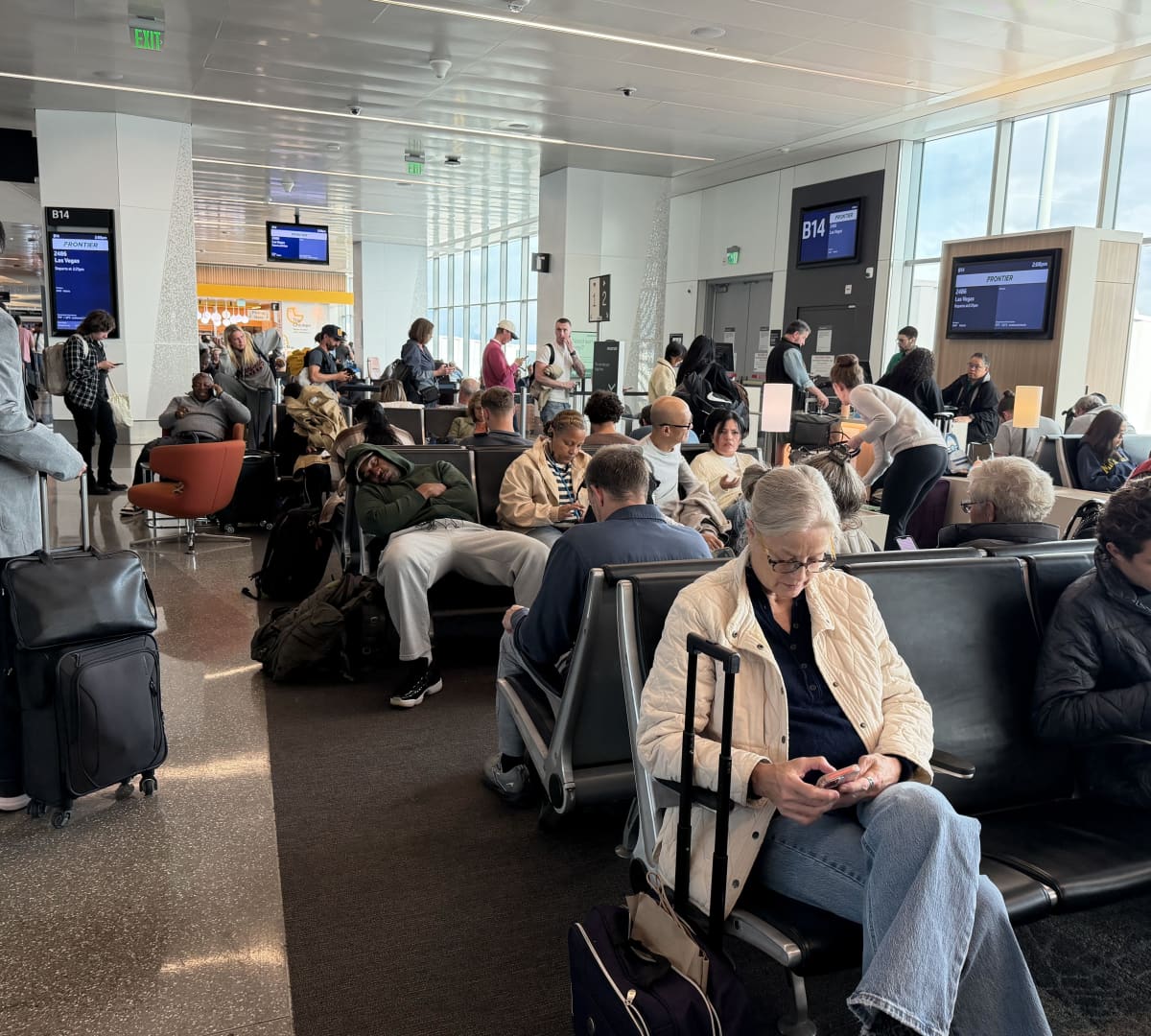
When routers overloaded with data forced the Federal Aviation Administration to issue its longest nationwide ground stop since 9/11 on Friday afternoon, it wasn't a cyberattack or a freak occurrence—it was a failure of neglect. Transportation Secretary Sean Duffy was right to blame outdated U.S. infrastructure, but his call for Congress to approve more money to overhaul air traffic control rings hollow without urgency. This crisis, which canceled about 9,000 U.S. flights and delayed more than 7,000 others on Friday alone, with more than 3,000 cancellations and close to 1,000 delays continuing Saturday as of 5:45 a.m. ET according to FlightAware, is a preview of what happens when a nation treats its critical infrastructure as an afterthought.
The scope of this disruption cannot be overstated. Around 3 million people would typically be scheduled to fly on a Saturday, according to Cirium. The ground stop that lasted more than four hours forced aircraft to divert across the country, creating a cascading nightmare that airlines are still untangling. Even as carriers deployed as many spare planes and crews as possible to recover, knowing they needed to start fresh for the upcoming Thanksgiving holiday period, the damage was done. College football teams traveling on charter flights faced such severe uncertainty that Transportation Secretary Duffy felt compelled to encourage them to reach out to the FAA to schedule their flight times during a Friday press briefing. The Southeastern Conference was forced to announce on X that some games had been moved to Sunday due to the flight disruption.
What makes this failure particularly damning is that it wasn't surprising to those paying attention. Aging equipment and a shortage of air traffic controllers have angered airline executives for years, according to the report, with complaints focused on the cost of resulting disruptions. The U.S. operates the world's busiest airspace—a distinction that should translate to world-class infrastructure, not equipment that fails under routine stress. Yet here we are, with a system that buckles when routers send inconsistent information to air traffic control centers.
The FAA's statement that it "thoroughly tested our systems to confirm they were stable and that operations remain reliable" before clearing flights to resume offers little comfort. Stable systems don't catastrophically fail. The question now isn't whether Congress should approve funding for overhaul—it absolutely should—but why it took a nationwide ground stop, the second since 9/11, to make this undeniable. Airlines and travelers shouldn't have to suffer mass disruptions while bureaucrats debate the merits of infrastructure investment. This crisis demands action, not promises.