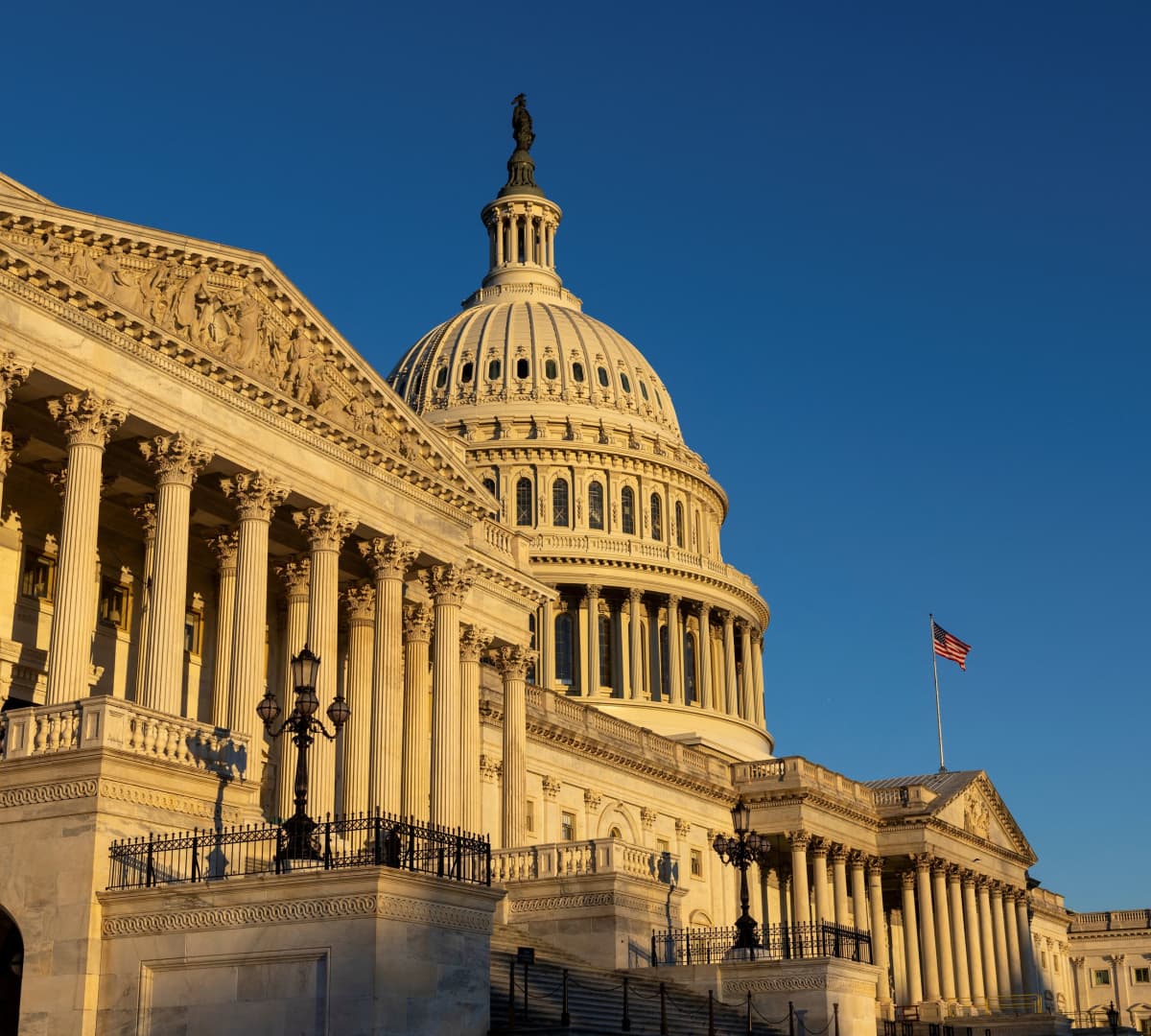
Democrats won control of both chambers of Congress in the midterm election, a shift that could reshape household finances across multiple areas, though legislative changes will face obstacles.
Trump can veto bills a Democrat-controlled Congress passes, and based on projections, Democrats lack the numbers needed to override a presidential veto. Newly elected members won't take office until January.
On taxes, Democrats may support extending provisions from Trump's 2017 tax cuts that expire after 2028, including deductions for tip income, overtime earnings, seniors and auto loan interest. However, lawmakers will need to address the federal budget deficit, which ballooned to nearly $2 trillion for fiscal year 2026. Newly elected Democratic senators James Talarico of Texas, Troy Jackson of Maine and Annie Andrews of South Carolina all campaigned on expanding the child tax credit.
Democrats are likely to hold hearings on Trump administration student loan policies. One priority may be fixing the Public Service Loan Forgiveness program, which cancels remaining federal student debt for eligible government and nonprofit workers after a decade. Trump officials reassessed repayment timelines over the summer, delaying some borrowers' forgiveness dates by years. Trump has said he may support legislation capping federal student loan interest rates.
On housing, Democrats will likely explore measures to help first-time homebuyers, though lawmakers have little direct impact on home prices or mortgage rates, which are influenced by market forces and Treasury yields.
Congress will need to address Social Security insolvency. The program's trustees project the trust fund may be depleted in the fourth quarter of 2032. Without congressional action, benefits could face an across-the-board cut of 22%. Some Democratic and Republican lawmakers have called for increased payroll taxes on high earners.
On credit cards, Democrats might support a rate cap. Aaron Klein at the Brookings Institution said a cap would likely be welcome for low- and middle-income Americans more likely to carry credit card balances. Any such cap is likely to be closer to 36% than the 10% cap Trump has sought, according to Jaret Seiberg at TD Cowen.
Democrats' control could stall crypto-friendly regulations. Lee Reiners, a cryptocurrency regulation expert at Duke University, said the Clarity Act, which would give the Commodity Futures Trading Commission greater authority over cryptocurrency trading, is unlikely to advance. The bill passed the House in July 2025 by a 294-134 vote but failed in the Senate on a 49-50 procedural vote in September.