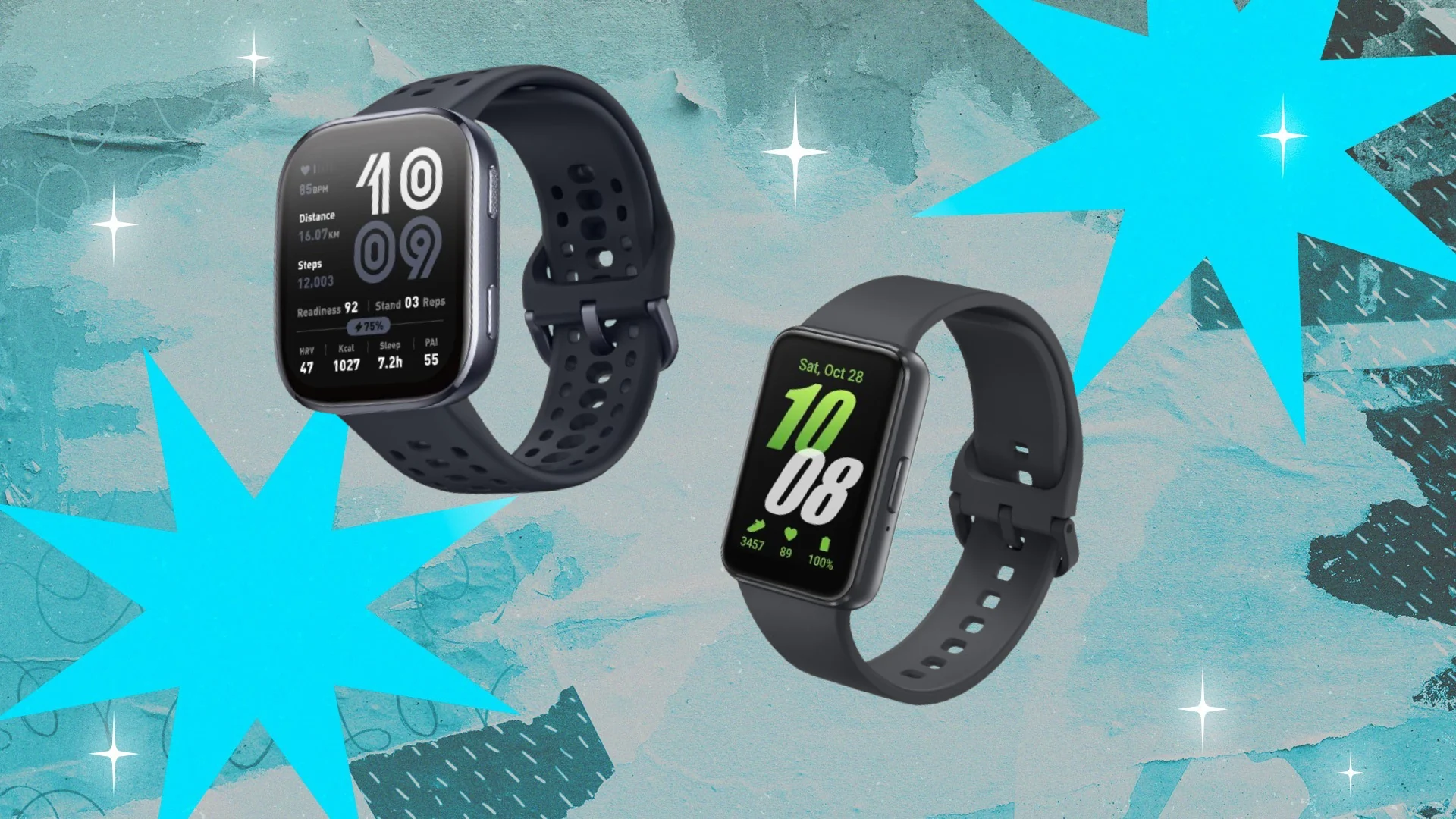
The Amazfit Bip 6 and Samsung Galaxy Fit 3 offer smartwatch features at prices well below mainstream options. The Amazfit Bip 6 costs $79.99, while the Galaxy Fit 3 costs $60. Both were tested by CNET Labs.
The Bip 6 has a 1.97-inch AMOLED display with 390 by 450 pixel resolution, though it lacks an Always-On display. It includes GPS for outdoor running without a smartphone, and CNET Labs found GPS acquisition takes about 10 seconds. Heart rate tracking proved reliable compared to a Polar chest strap monitor. The watch also measures body temperature changes, sleep stages, breathing quality, and blood oxygen saturation. An optional subscription provides AI coaching tools. Battery life reached eight days under heavy use with multiple GPS workouts, though CNET speculates up to two weeks is possible with limited settings. Charging takes about two hours via USB-C, with no charger included. The watch's interface felt clunky and sluggish to CNET, and the Flow voice assistant was described as borderline unusable. Android users can reply to texts with keyboard or dictation. iPhone users require a third-party app to send and receive texts.
The Galaxy Fit 3 uses a fitness tracker design with a 1.6-inch AMOLED display. It costs $60 and works with all Android devices, though Samsung-specific features require a Galaxy phone. Battery life reached three days under heavy use, though Samsung claims up to 13 days with optimized settings. Fast charging fills the watch in just over an hour. CNET found the Fit 3 lacks voice dictation and mobile payments. It cannot initiate text messages, only send prewritten responses, and cannot answer incoming calls. The watch tracks over 100 workout types and automatically logs runs, walks, rowing, and elliptical sessions if auto-tracking is enabled. It has an IP68 water resistance rating for swimming. Heart rate tracking proved generally accurate compared to a Polar chest strap, though it registered spikes slower than other options. The sleep tracker detected sleep stages and snoring alerts via Galaxy phone microphone, though CNET found the sleep score somewhat inaccurate.