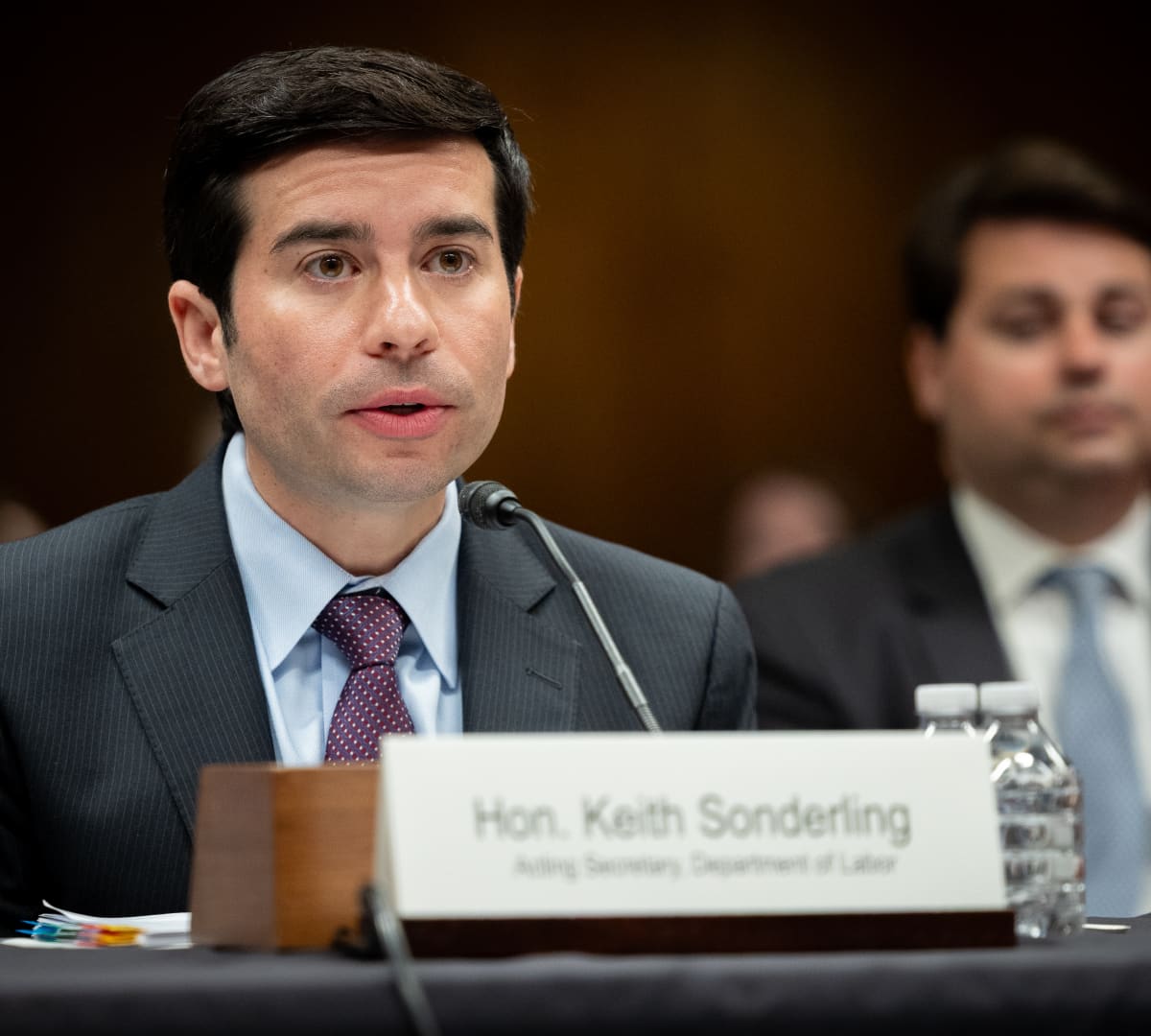
The Trump administration proposed a rule Monday that would restrict ESG investing in 401(k) plans by requiring plan fiduciaries to make investment decisions "solely in the financial interests of workers and retirees, not to advance political or social agendas," according to Secretary of Labor Keith Sonderling.
The regulation would amend provisions under the Employee Retirement Income Security Act of 1974 (ERISA). A Labor Department official stated during a press briefing that the rule will inform fiduciaries "whether an impact fund or ESG fund is appropriate for retirement funds," adding "We believe the answer will be very rarely."
The proposal eliminates two current provisions. The "tiebreaker test" allowed plan sponsors to choose an ESG fund over another when financial factors were equal, based on social benefits. The "participant preference provision" allowed employers to select funds partly based on worker preferences, provided they still met financial criteria.
Currently, about 5% of 401(k) plans offer an ESG fund, and less than 1% of overall investor assets in 401(k) plans are held in ESG funds, according to a Plan Sponsor Council of America report from earlier this month.
A Morgan Stanley analysis in September found that sustainable funds returned a median 4.9% in the first half of 2026, versus 4% for traditional funds. A hypothetical $100 investment in a sustainable fund in December 2018 would have grown to $171 by the report's date, compared to $159 for a traditional fund over the same period.
The proposal is subject to a 60-day public comment period.