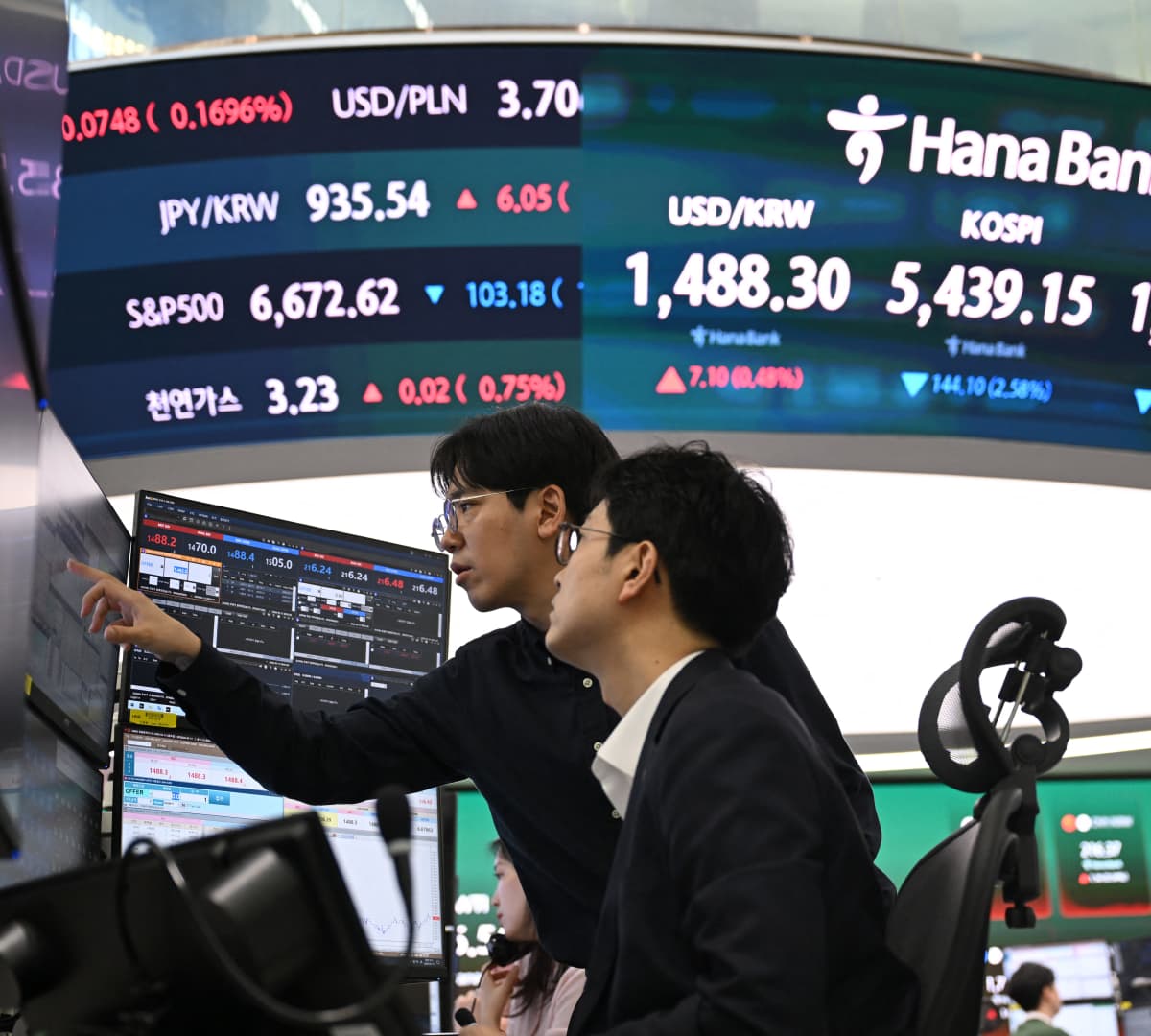
South Korea, China, and Taiwan announced market-support measures this week as tech stocks fell sharply across the region.
South Korea's finance ministry said Sunday it would activate its securities-market stabilization fund, valued at 10.76 trillion won (nearly $8 billion), which was established in 2020. The government will also relax share-buyback limits for listed companies for three months starting Nov. 24, launch a "special intensive monitoring period" to prevent illegal short-selling, and track margin lending and forced liquidations. The Kospi index has fallen more than 46% from its June high, driven by losses in Samsung Electronics and SK Hynix.
The ministry cited "internal and external uncertainties surrounding the global AI and semiconductor industries, as well as U.S. interest rate hikes" as reasons for increased market volatility.
Taiwan's Financial Supervisory Commission announced Friday that short selling below the previous day's closing price is now "completely prohibited" except for hedging by securities and futures firms. The regulator will increase margin requirements for short selling and suspend applications from securities firms to issue warrants. Taiwan also encouraged firms to buy back stock between the fourth quarter of 2026 and first quarter of 2027, with purchases counting toward environmental, social and governance scores. TSMC, Taiwan's largest company, fell 15% last week.
China took a different approach. The Shanghai Stock Exchange announced Sunday that the minimum margin ratio for margin-financed stock purchases will drop to 80% from 100% starting Nov. 30, allowing investors to borrow more. Shanghai and Shenzhen exchanges also cut fees.
Monday's trading showed mixed results. The Kospi fell 3.26%, China's CSI 300 declined 0.71%, and Taiwan's Weighted Index gained over 2%.