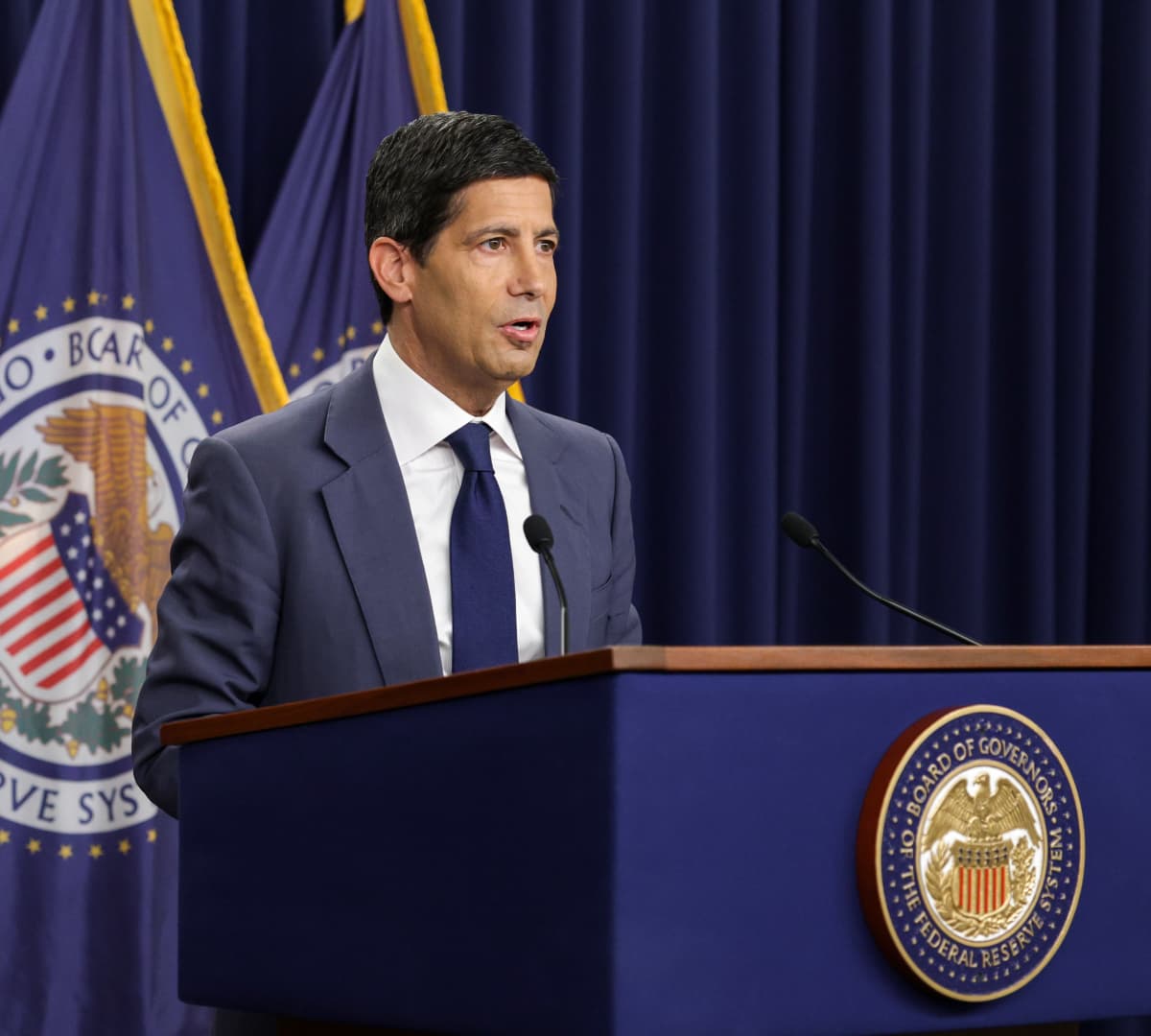
Federal Reserve Chair Kevin Warsh said Monday that artificial intelligence will have "significant impact on the economy" but cautioned that the technology could disappoint investors and workers.
Speaking in San Francisco before a task force he created to examine productivity and employment, Warsh outlined three possible outcomes. AI could boost productivity and economic growth while maintaining full employment. It could displace workers through automation and raise joblessness. Or it could fail to deliver returns despite heavy capital investment, causing stock valuations to fall and unemployment to rise.
"After significant capital investment and stock market gains, expected returns could turn down and equity valuations could fall, leading to an economic slowdown and a more notable rise in unemployment," Warsh said in prepared remarks.
Warsh said he uses the term "super intelligence" instead of artificial intelligence, following a recent Trump administration directive. He stressed that this technology represents "an entirely new force in economic life and society" and has already begun reshaping the economy.
The conference Monday featured panels with business leaders, economists and academics. A final session included Warsh and task force leader Marc Andreessen, co-founder of Andreessen Horowitz.