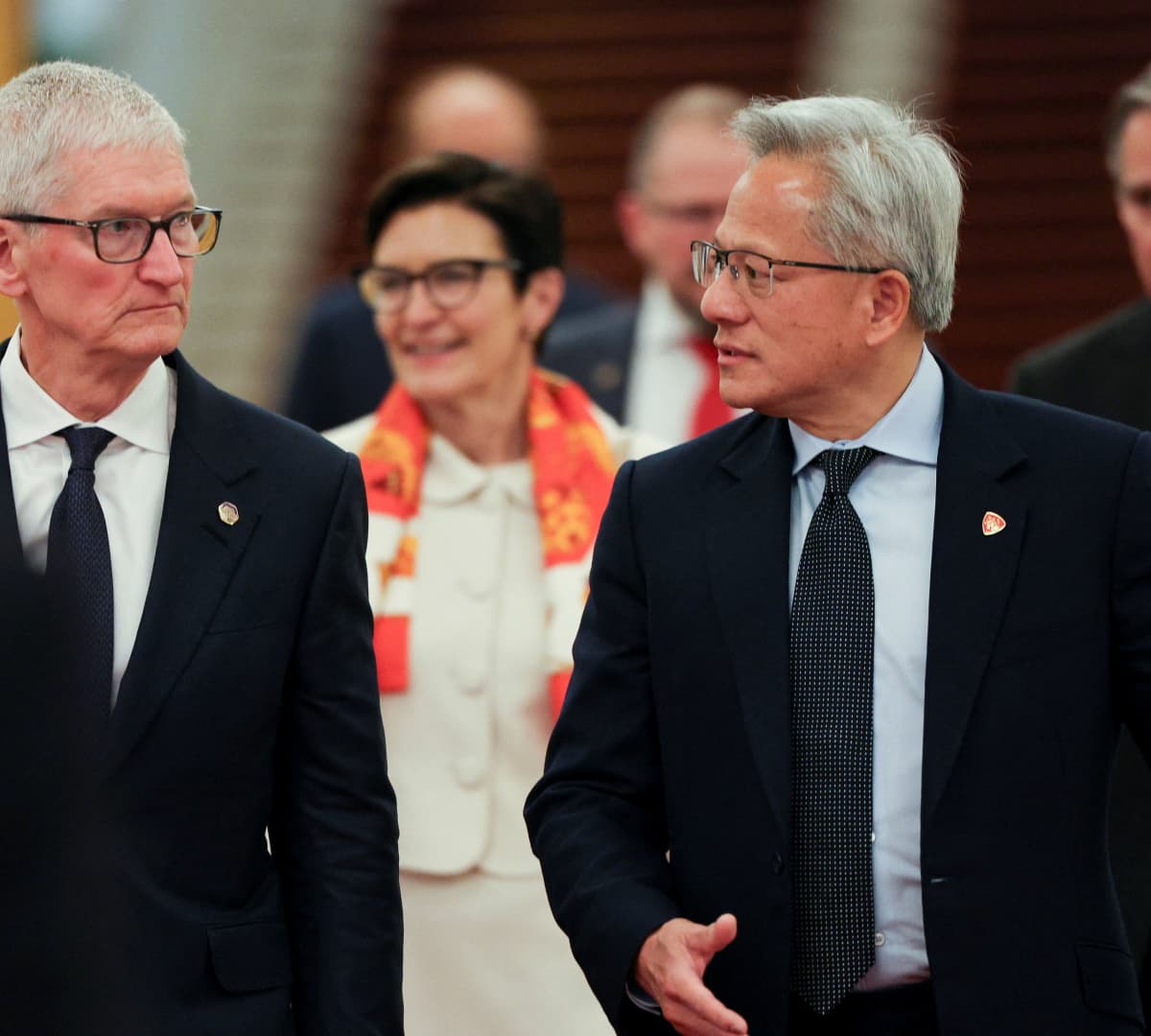
Jensen Huang resigned as Nvidia CEO on Thursday after 33 years leading the company he co-founded. Reports linked his departure to extramarital affairs, including with a woman U.S. intelligence believes works as a Chinese spy.
Nvidia's board is searching for a new CEO while CFO Colette Kress serves in the role temporarily.
Experts told CNBC that Huang's sudden exit poses unique challenges for his successor. Michael Withers, a management professor at the University of Notre Dame's Mendoza College of Business, said the situation is different from past founder transitions at major companies. "I'm not sure we've seen a situation quite like this, where the founder and CEO of one of the world's largest companies faces such a sudden departure amid scandal," Withers told CNBC.
When Steve Jobs left Apple in 2011, the company already had an internal successor in Tim Cook, who had prepared for years by investing in chip strategy and supply chain management. Tim Cook's 15-year tenure saw Apple's market cap grow from roughly $350 billion to $4 trillion.
Larry Page and Sergey Brin stepped down from executive roles at Alphabet in 2019 after 21 years, calling it the "natural time" to simplify management. Alphabet shares gained over 300% under successor Sunder Pichai. Travis Kalanick's departure from Uber in 2017 unfolded over months and attracted less attention than Nvidia's crisis.
Nvidia's new CEO will face obstacles beyond normal successor challenges. Withers noted the company appears to lack a succession plan and that Huang operated with 60 direct reports in a flat structure. The successor must handle the scandal's impact on Nvidia, rebuild relationships Huang managed with government officials and chip suppliers like SK Hynix and Samsung, and maintain the company's product roadmap while competing against AMD and hyperscalers developing their own chips.