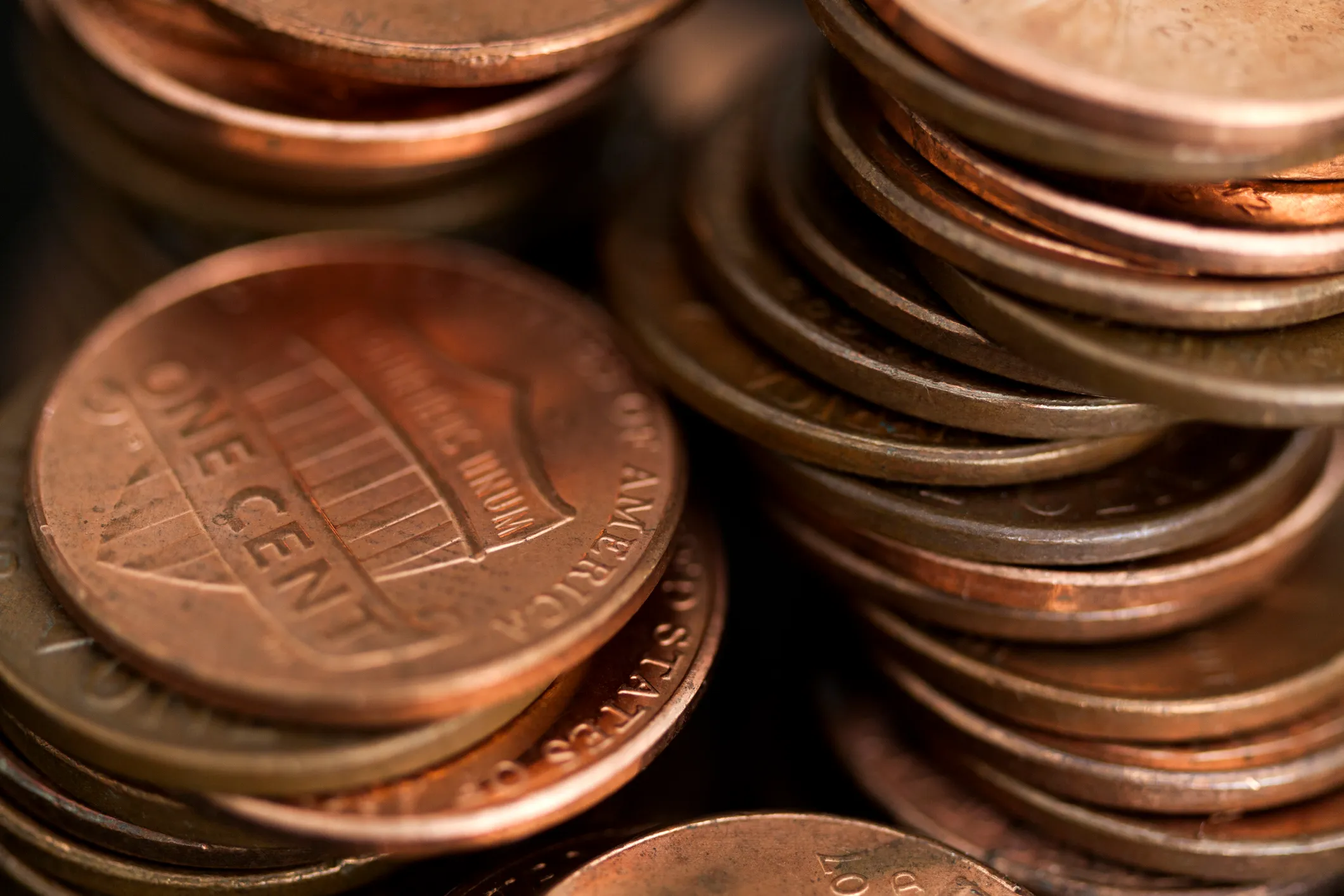
The U.S. Mint stopped producing pennies in November 2025 because it cost more to make each coin than its face value. Existing pennies remain legal tender, but millions sit unused in homes across the country.
You have several practical options. Banks and coin-counting machines can convert your pennies to cash quickly. You can spend them gradually in everyday transactions, though many businesses and consumers already avoid using them. Taking your pennies to a coin-counting machine may reveal that even a small jar totals more than expected.
Some people are holding onto pennies in case they become collectible, particularly coins with errors or unique mint marks. Others use loose change as a savings tool, either by collecting it in a jar or by using apps that round up purchases and invest the spare change automatically.
Donating pennies to charities is another option. Many organizations accept spare change, and contributions add up when combined with others' donations.
Beyond currency, pennies have practical household uses. They can stabilize wobbly tables, serve as makeshift tools, help check tire tread, or work in DIY projects like coasters, countertops, or wall art. Some people keep pennies as keepsakes to preserve American history, since production has now halted.