China is directing state-linked companies to acquire larger ownership stakes in overseas mines, aiming to control supplies of critical minerals used in electric vehicles, semiconductors, and jet engines.
In April, China established a dedicated overseas bureau to oversee investments abroad by central state-owned enterprises. In July, the government created a mining investment vehicle to coordinate overseas deals and advise Chinese companies on compliance and risk management.
Chinese mineral acquisitions abroad reached $8.8 billion in the first three quarters of 2025, the highest annual total since at least 2018, according to Rhodium Group. The acquisitions have focused on minerals China lacks domestically, including lithium, nickel, cobalt, and gold.
Dan Wang, China director at Eurasia Group, said the centralized strategy replaces firm-level decision-making and allows for larger, better-aligned global mining investments. The approach could curb competition among Chinese firms and strengthen their position against Western competitors and newer entrants like Saudi Arabia and India. A longer approval process could raise corruption risks and weigh on investment returns, Wang added.
Beijing treats 70% import dependence as a national security red line, putting copper, lithium, cobalt, nickel, bauxite, and iron ore under pressure to expand supply abroad. For gold, which sits within a 50% reliance range, the government still seeks additional access to high-grade resources.
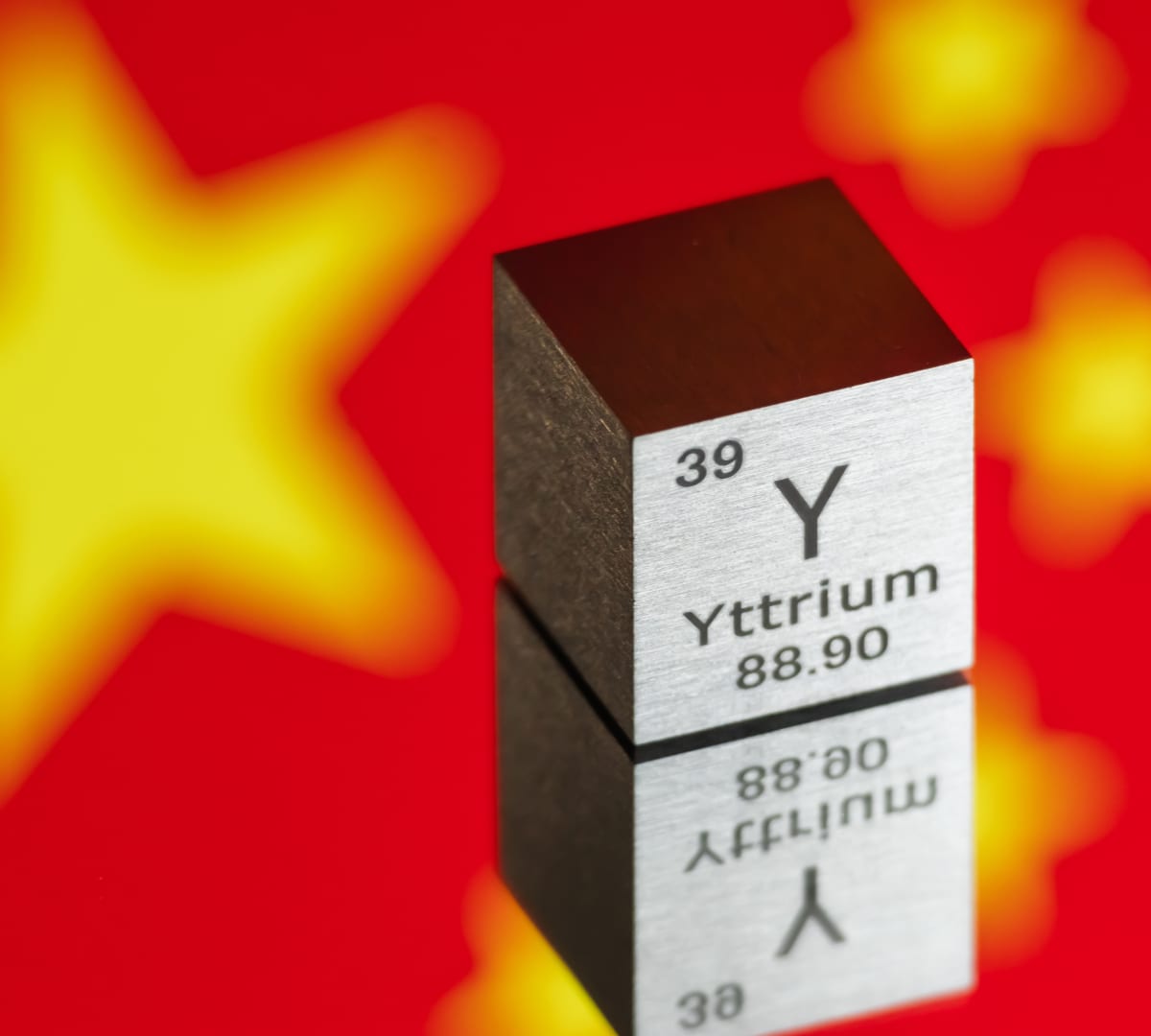
China now produces about 92% of the world's refined rare earths, according to the International Energy Agency. The country curbed exports of seven medium and heavy rare earths since last year, requiring exporters to obtain licenses. Japan's exports of yttrium oxide from China collapsed to 4,000 kilograms in September from 51,000 kilograms a year earlier, and the oxide's price reportedly surged to about $1,150 a kilogram outside China compared with about $9 a kilogram inside the country.
Host governments increasingly demand local processing instead of raw mineral exports. Chinese firms have adapted by building smelting and refining capacity near mines rather than shipping materials back to China, particularly visible in Indonesia where a nickel ore export ban prompted Chinese companies to establish local processing facilities.