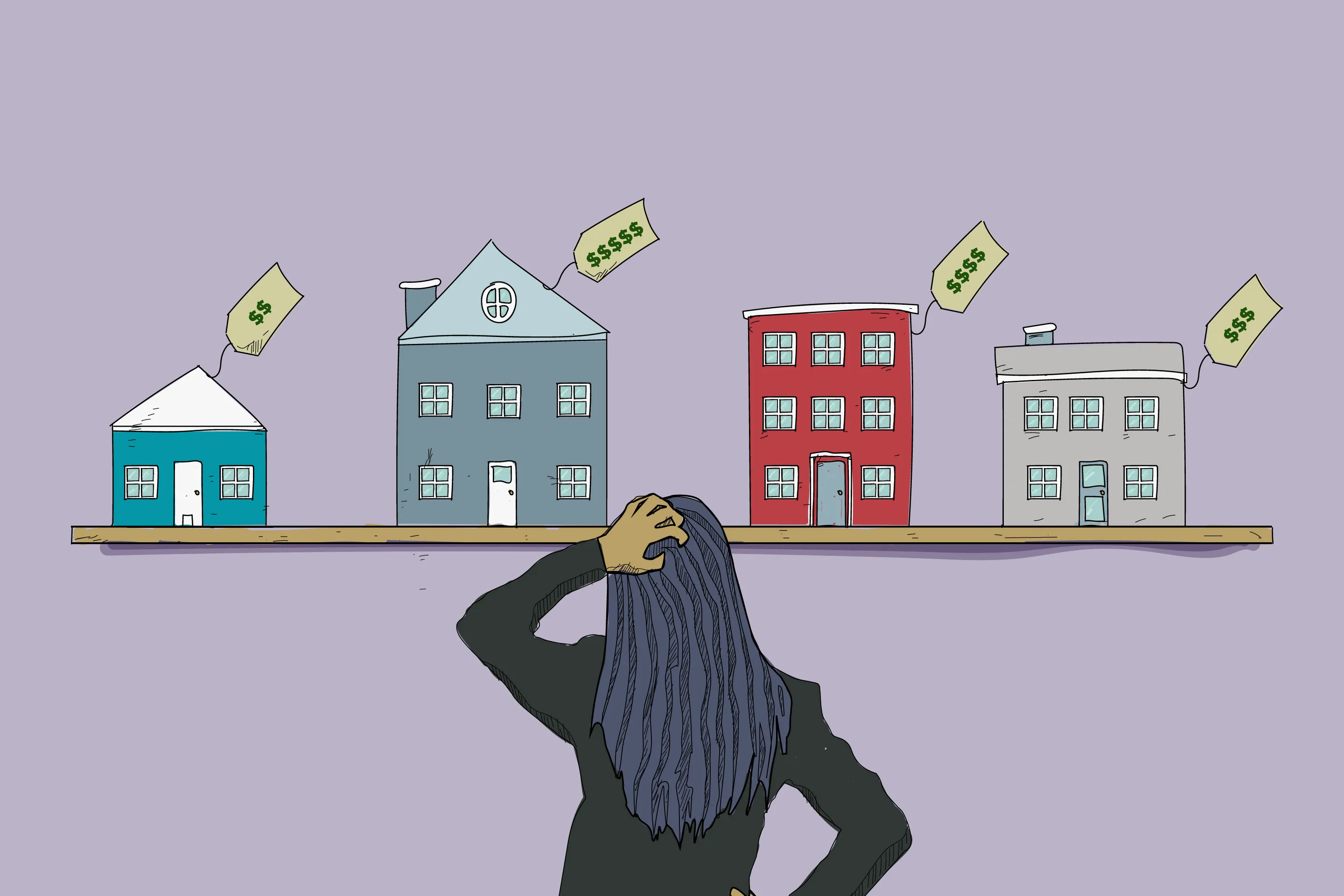
Freddie Mac's 30-year fixed mortgage rate stood at 7.24% on October 29, after climbing above 7.40% earlier in that month. Higher rates reduce the home price you can afford at the same monthly payment.
Your ability to buy depends on several factors. Lenders typically look at your debt-to-income ratio (DTI), down payment, credit score, and monthly income. Conventional loans require a DTI of 36% for manual underwriting, which can stretch to 45% with strong credit and reserves, or up to 50% with automated underwriting. Monthly payments should not exceed 28% of your pre-tax income.
First-time buyers with conventional mortgages need a minimum down payment of 3%; repeat buyers need 5%. Most lenders require a credit score of at least 620, though Fannie Mae dropped its fixed 620 minimum for applications after November 16, 2025.
Other loan types offer different terms. FHA loans allow qualifying ratios of 31% for housing costs and 43% for total debt, with ratios climbing to 47/57 under automatic underwriting. Borrowers with a credit score of 580 or higher can put down as little as 3.5%. FHA loan limits for single-family homes in 2026 range from $541,287 in low-cost areas to $1,249,125 in high-cost areas.
VA loans, available to active military, veterans, and surviving spouses, allow borrowers to qualify with 0% down in many cases. The VA does not set minimum credit requirements, though lenders do.
USDA loans require no down payment for qualifying rural and some suburban areas and allow financing up to 101% of the home's value. Borrowers must earn no more than 115% of the area's median household income.