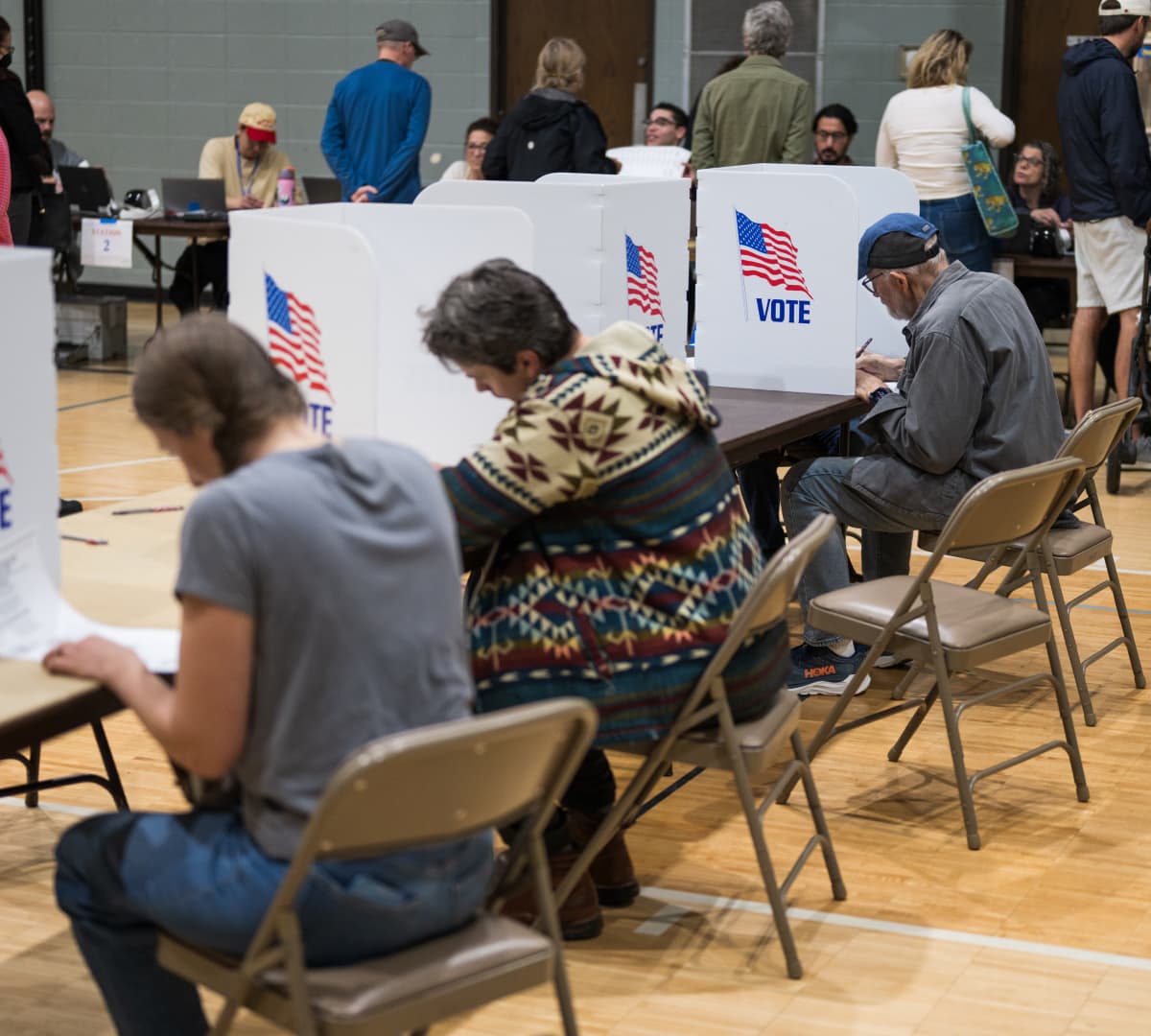
Tuesday's election includes state and local ballot measures that could reshape the municipal bond market through tax policy changes.
Blue states have measures that would raise taxes on high-income earners. California has a "billionaire tax" proposing a one-time 5% levy on taxpayers with at least $1 billion in assets. California also has a measure to make a temporary tax hike permanent on individuals earning over $371,000, currently set to expire in 2031.
Red states are pursuing property tax cuts. Florida voters will decide whether to increase the homestead exemption for non-school district property taxes, raising the exemption to $150,000 in 2027 and $250,000 by 2028 for qualified homeowners.
Dan Close, head of municipals at Nuveen, said tax increases would make the muni bond exemption more valuable. "The impact to the muni bond market will be to make the exemption more valuable," he said. Investors seeking tax shelter would likely buy munis, sending bond prices higher.
In Florida, local governments may need to find other revenue sources or increase tax rates to offset lost property tax revenue if the homestead exemption expands, said Tom Kozlik, head of public policy and municipal strategy at HilltopSecurities.
Voters will also decide on new state and local government debt, which could add supply pressure. Year to date through September, $473.8 billion in munis have been issued, a 7.8% increase over the same period last year.
Washington state voters will decide whether to repeal a 9.9% tax on individuals earning above $1 million annually, set to go into effect in 2028. Nuveen recently launched a separately managed account dedicated to Washington state bonds.
Cooper Howard, director of fixed income research and strategy at the Schwab Center for Financial Research, said supply is the biggest issue. About 70% of the broad muni index is rated triple-A or double-A.