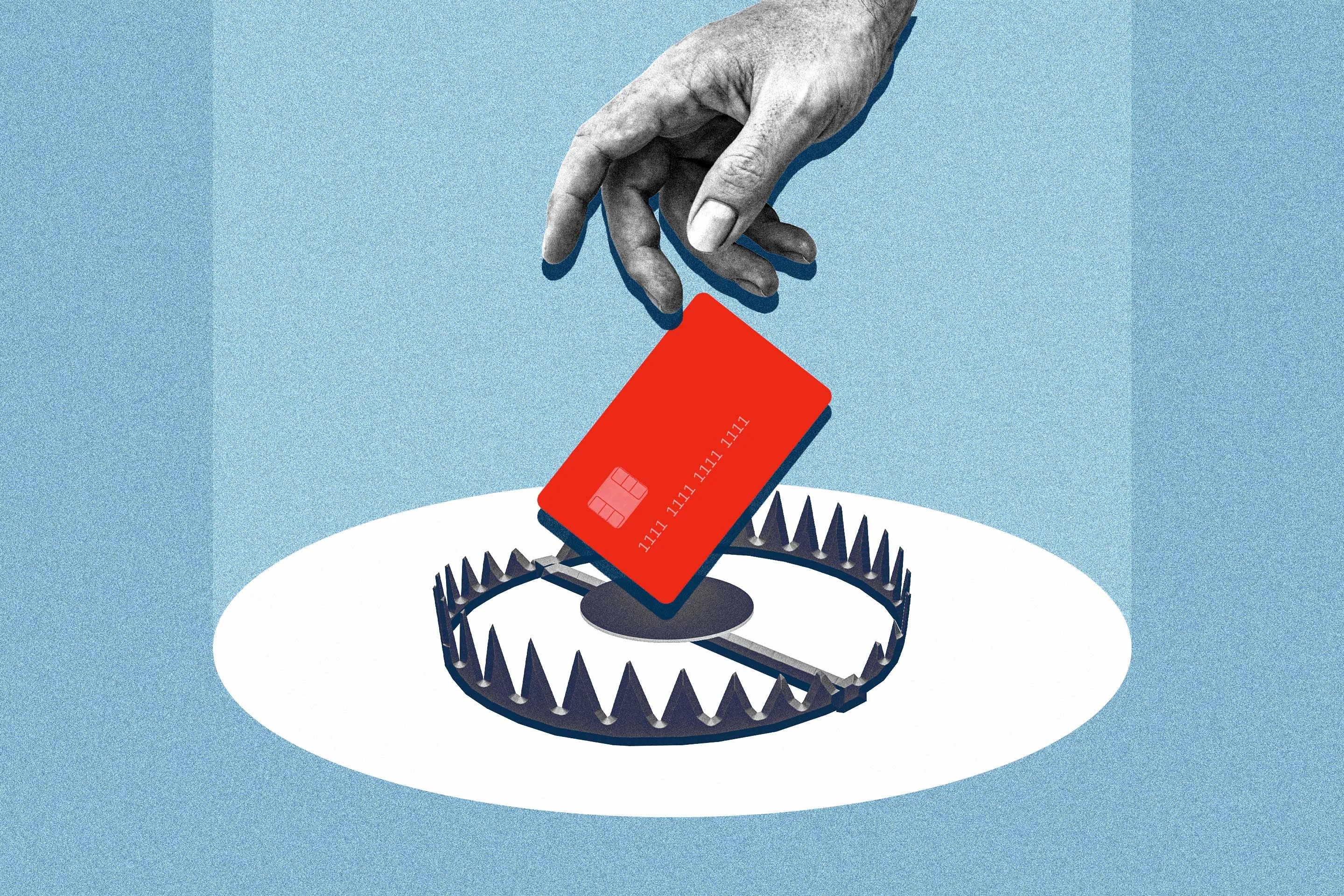
# The 0% APR Trap: Why Introductory Rates Lead to Higher Debt
Credit cards offering 0% introductory annual percentage rates sound like a financial gift. The Consumer Financial Protection Bureau's December 2025 analysis reveals they often backfire, leaving cardholders with larger balances than those using standard cards. The data exposes a behavioral pattern that costs everyday Americans real money.
Here's what happens. A cardholder applies for a card advertising 12 to 21 months of 0% APR on purchases or balance transfers. The zero rate removes the immediate cost of carrying a balance. That psychological relief changes spending behavior. People charge more because the interest penalty feels abstract or far away.
The CFPB found that accounts with these introductory rates end up carrying higher long-term balances overall. This creates a compounding problem. Once the promotional period ends, the regular APR kicks in, typically ranging from 18% to 25%. A balance that seemed manageable at 0% suddenly costs hundreds of dollars per month in interest charges.
Take a concrete example. You transfer $5,000 to a card with 18 months at 0% APR. During that window, you make minimum payments and add another $2,000 in purchases. When month 19 arrives, your remaining $4,000 balance now accrues interest at 22% APR. Monthly interest charges start at roughly $73. If you only make minimum payments, most of that money covers interest, not principal.
The CFPB data suggests this trap works because consumers underestimate two things: how much they'll spend during the promotional period, and how quickly interest compounds once it returns. Cardholders who wouldn't normally carry a balance begin doing so. Existing balances grow. The card shifts from a payment tool to a debt instrument.
Credit card issuers structure these offers precisely because they work this way. A customer acquired through a 0% offer generates more revenue through interest charges than a customer acquired through a cash-back reward. The bank trades short-term lost interest income for long-term higher balances and larger interest payments.
This doesn't mean 0% intro APR cards are always bad. Strategic users can benefit. Balance transfers from high-rate cards (24% APR) to 0% cards for 21 months genuinely save money if the balance gets paid down during the promotion. The math works only when you treat the promotional window as a deadline, not a buffer for additional spending.
The trap activates when you view 0% as permission to spend more or as a solution that extends beyond the promotional period. The CFPB's warning applies most to consumers already struggling with revolving debt or those without a strict repayment plan.
Ordinary savers and revolvers should approach these offers with skepticism. Read the fine print for the regular APR. Calculate what your minimum payment would be after the promo ends. Better yet, determine if you can pay the full balance before month one of interest kicks in. If you can't answer that question affirmatively, the card's appeal disappears.