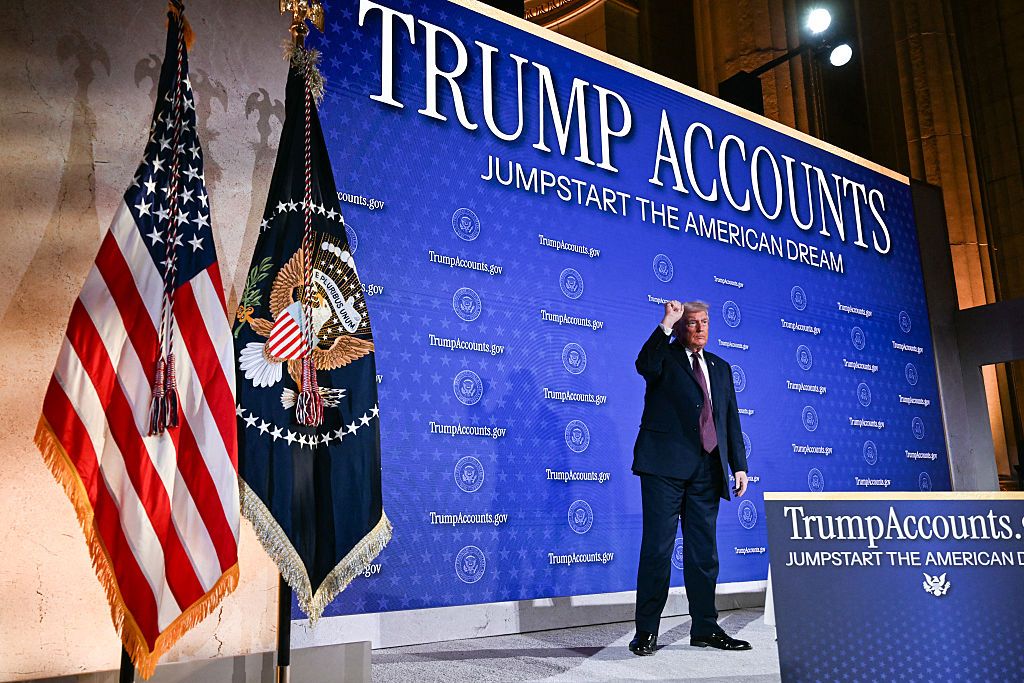
# Trump Accounts: How Five New ETFs Stack Up for Investors
A new category of exchange-traded funds has emerged designed specifically for Trump-focused accounts, offering investors a way to bundle their political preferences with portfolio strategy. These products reflect a growing trend of branded investment vehicles tied to political figures and movements.
Five ETFs now exist in this space, each with different fee structures, holdings, and performance trajectories. Understanding the distinctions matters because fees directly reduce your returns over time, and diversification levels vary sharply between these products.
The ETF landscape for Trump accounts includes options ranging from broad-based political exposure to more concentrated bets. Some funds charge management fees above 0.5 percent annually, while others keep costs closer to 0.2 percent. Over a 20-year investment horizon, a 0.3 percent fee difference compounds into meaningful underperformance.
Diversification varies considerably across these five products. Some funds hold 50-plus stocks spanning energy, defense, and financial sectors. Others concentrate holdings in fewer companies, creating higher volatility and idiosyncratic risk. Investors seeking broad market exposure should scrutinize the actual holdings list rather than relying on the Trump branding alone.
Historical performance data reveals mixed results. These products emerged relatively recently, so track records remain limited. The funds that invested heavily in energy and defense stocks benefited from post-2016 policy environments favorable to those sectors. Concentration in oil companies and defense contractors created significant outperformance in specific periods, but also drawdown risk during commodity downturns.
Long-term growth potential depends less on the Trump label and more on underlying sector allocation. A fund concentrated in energy faces structural headwinds from renewable energy transition. A fund weighted toward financial services rides interest rate cycles. Investors need to separate emotional appeal from fundamental business prospects.
Fee comparison reveals predictable patterns. The lowest-cost option charges roughly 0.21 percent annually. The highest charges 0.73 percent. For a $10,000 investment growing at 7 percent annually, that 0.52 percent fee gap costs you $850 after 20 years in lost compounding returns.
Sector concentration also shapes tax efficiency. Funds holding concentrated positions in specific stocks generate higher turnover and capital gains distributions. Index-tracking alternatives with similar political themes typically offer better tax efficiency for taxable accounts.
The availability of five Trump-themed ETFs reflects investor demand for products aligning personal values with portfolio construction. This trend parallels ESG fund growth on the opposite end of the political spectrum. Whether these products represent genuine value or simply capitalize on novelty remains an open question.
Consider your actual investment goals before selecting based on branding alone. If you want broad market exposure with a political tilt, compare the five options on fees and holdings. If you want concentrated sector exposure, understand you're taking a bet on energy or defense, not just buying "Trump."