# Stock Market Falls on Fed Rate Hike Announcement, Markets React to Future Policy Signals
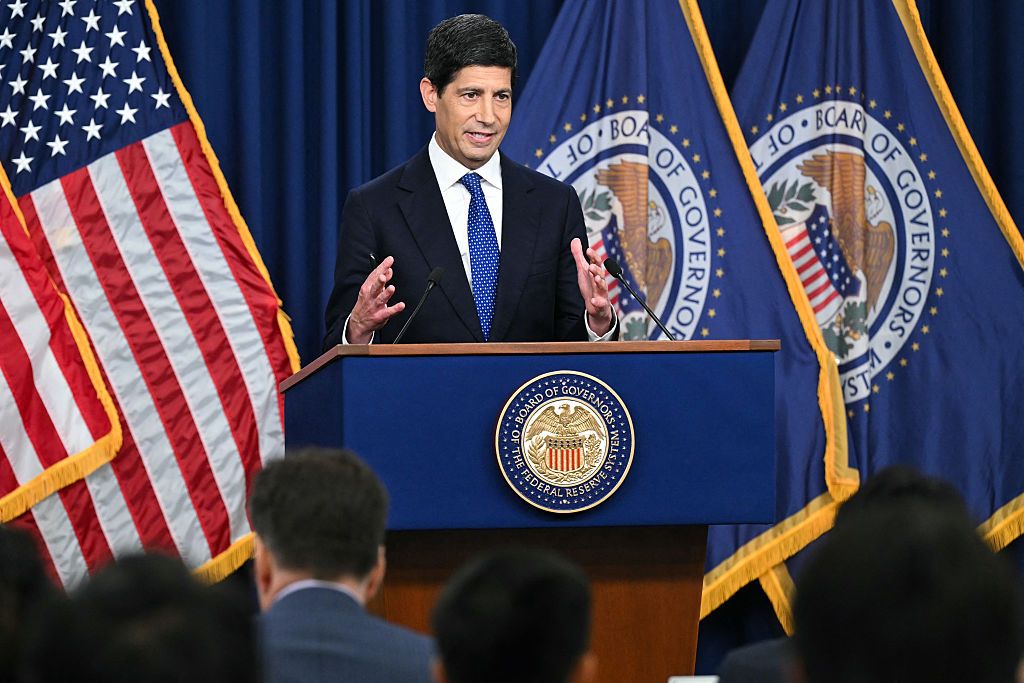
The Dow Jones Industrial Average dropped 631 points today following Federal Reserve Chair Kevin Warsh's comments about the central bank's latest rate increase and its forward guidance on monetary policy. The market had held relatively steady before Warsh's remarks, suggesting investors reacted specifically to his words about the Fed's direction.
Warsh's statements appear to have spooked equity investors who had been waiting for clarity on interest rate trajectory. When the Fed Chair addressed the assembled market participants, his comments about the current rate hike and expectations for future moves triggered the sharp sell-off. The timing reveals how sensitive markets remain to Fed communication, particularly around rate decisions and what policymakers signal about coming quarters.
Higher interest rates affect stock valuations directly. When the Fed raises the discount rate it uses to evaluate future corporate earnings, those earnings become worth less in present-value terms. Technology stocks and growth companies feel this pressure most acutely, since their value relies heavily on distant future cash flows. Investors repriced stocks downward as Warsh's comments suggested the Fed's tightening cycle might continue or persist longer than some had hoped.
The mixed market action before Warsh spoke suggests traders had positioned themselves for one outcome, then shifted rapidly once new information arrived. This dynamic plays out regularly after Fed announcements. Markets rarely move smoothly on rate decisions alone. Instead, the real turbulence comes from forward guidance. Investors want to know whether this hike represents a pause in tightening, a temporary pause before more increases, or the start of a sustained campaign.
For ordinary savers and investors, today's action carries practical lessons. Stock portfolios that skew heavily toward growth and technology experienced larger losses than those weighted toward dividend-paying industrial stocks or utilities. Bond investors saw prices remain under pressure, since higher rates reduce the value of existing fixed-income holdings. Anyone holding a mix of stocks and bonds felt the ripple effects across both asset classes.
The Fed rate hike itself moved the federal funds target range higher, which trickles down to consumer rates. Credit card APRs, home equity lines of credit, and variable-rate loans all move higher when the Fed tightens. Savers holding money market accounts and high-yield savings accounts benefit from higher deposit rates, though banks move slowly to pass along full increases. Money market funds and short-term bond funds offer better yields in a higher-rate environment.
The market's immediate reaction to Warsh's comments underscores the power of Fed communication in driving short-term stock movements. Traders and algorithms keyed off his specific language around rate decisions and policy timing. Individual investors should remember that daily market swings, even sharp 600-point declines, don't necessarily change long-term investment strategy. However, they do signal when Fed policy remains in flux and when investors remain uncertain about the direction of rates ahead.
Monitoring Fed Chair statements, official rate decision releases, and forward guidance statements helps investors anticipate market moves before they happen. The reactions you see today reflect real uncertainty about what comes next from the central bank.