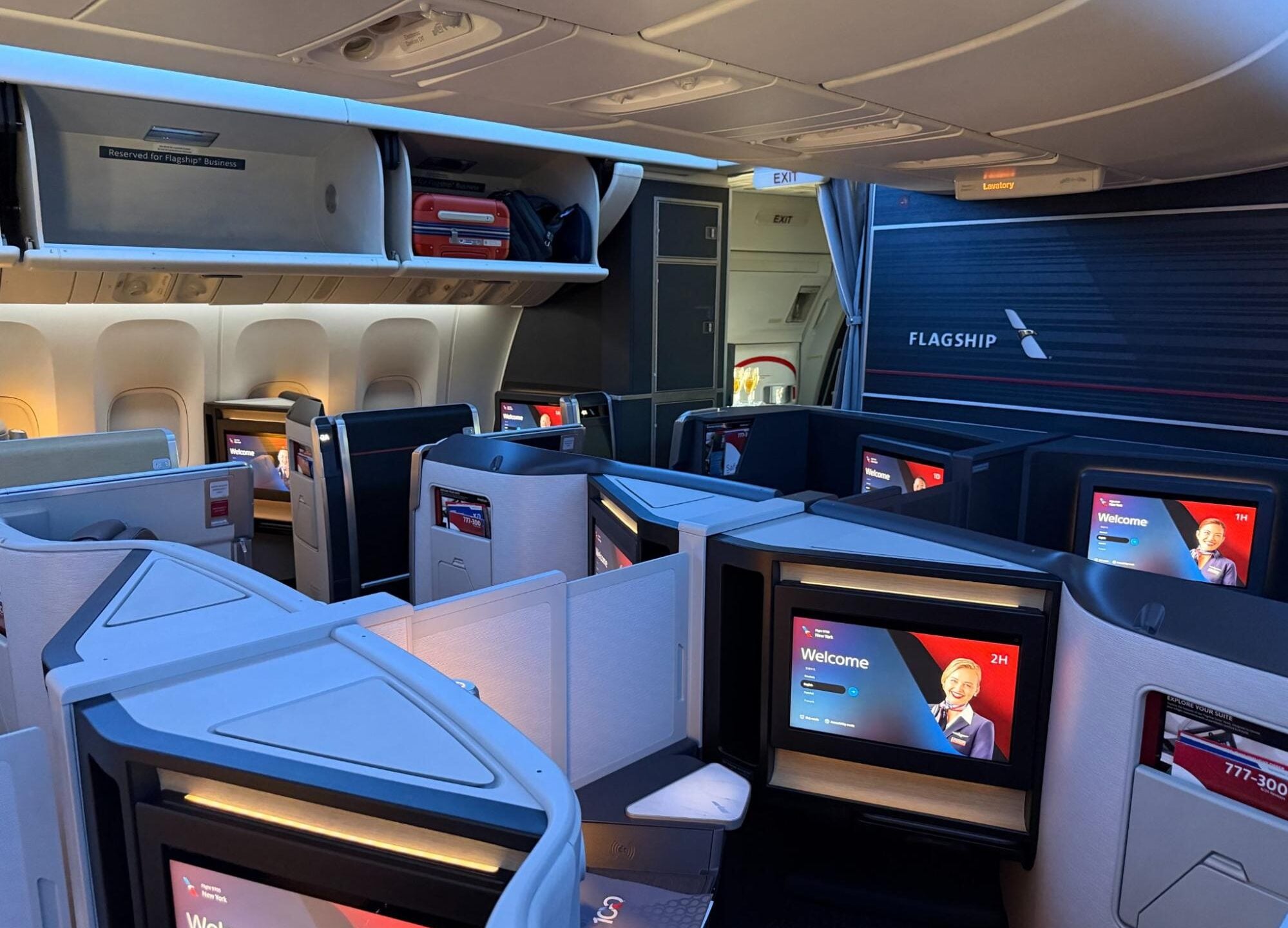
American Airlines has rolled out its most luxurious aircraft yet with a retrofitted Boeing 777-300ER that features 114 premium seats, more than any other plane operated by a U.S. carrier. The jet includes American's Flagship Suites product, marking a significant upgrade to the airline's long-haul travel experience.
The 777-300ER reconfiguration reflects a broader trend among U.S. carriers to capture premium revenue on international routes. American has stripped out economy seating to prioritize business and first-class cabins, betting that high-fare passengers justify the reduced passenger count. With 114 premium seats out of the total capacity, this aircraft dedicates roughly half its space to premium products.
The Flagship Suites represent American's answer to direct competitors. United Airlines offers its Polaris business class, while Delta has deployed its Delta One product on similar widebody aircraft. These premium cabins compete on amenities like lie-flat seats, dedicated cabin crews, enhanced meal services, and priority ground handling. American's retrofit aims to match or exceed these offerings on routes where international business travelers and premium leisure passengers concentrate.
For frequent flyers and premium cabin passengers, this deployment matters. The airline will likely assign the 777-300ER to routes where premium demand justifies the configuration. American typically deploys such aircraft on routes to Europe, Latin America, and other long-haul markets where business travel and premium leisure traffic run highest. Routes from Dallas/Fort Worth, Charlotte, Chicago, and Miami likely see priority assignment.
The financial stakes run high. Business class and first-class fares on transatlantic routes regularly exceed $5,000 to $15,000 per ticket. Even assuming the aircraft flies at 75 percent capacity and captures premium fares on half its seats, revenue per flight can reach six figures for international segments alone. This explains why American and competitors continue investing heavily in premium seating.
For economy passengers, the retrofit represents fewer seats on these specific aircraft. American is essentially trading volume for yield, a strategy that concentrates this plane on premium routes rather than economy-heavy operations. Flyers booking basic economy on the 777-300ER may find fewer seat availability, though American maintains other aircraft for price-sensitive routes.
The retrofit also signals American's confidence in post-pandemic premium travel demand. International business travel and premium leisure travel have rebounded strongly, with luxury travel holding steady even as economy bookings fluctuate. Airlines saw premium cabin capacity struggles during the pandemic and have spent years recapitalizing these segments.
This aircraft represents capital expenditure that American has already committed to. The airline does not build new planes but instead retrofits existing frames, reducing capital outlay compared to ordering brand-new aircraft from Boeing or Airbus. The retrofit costs money but likely costs far less than a new delivery, allowing American to upgrade its long-haul fleet incrementally.
American's move reflects the post-pandemic strategy across U.S. carriers. Premium seats generate 40 percent to 50 percent of revenue for many airlines while occupying roughly 20 percent of capacity. The math explains why retrofits focus on premium products. Passengers choosing basic economy or premium economy will see impact, but premium-focused expansion remains the airline industry's default playbook for now.