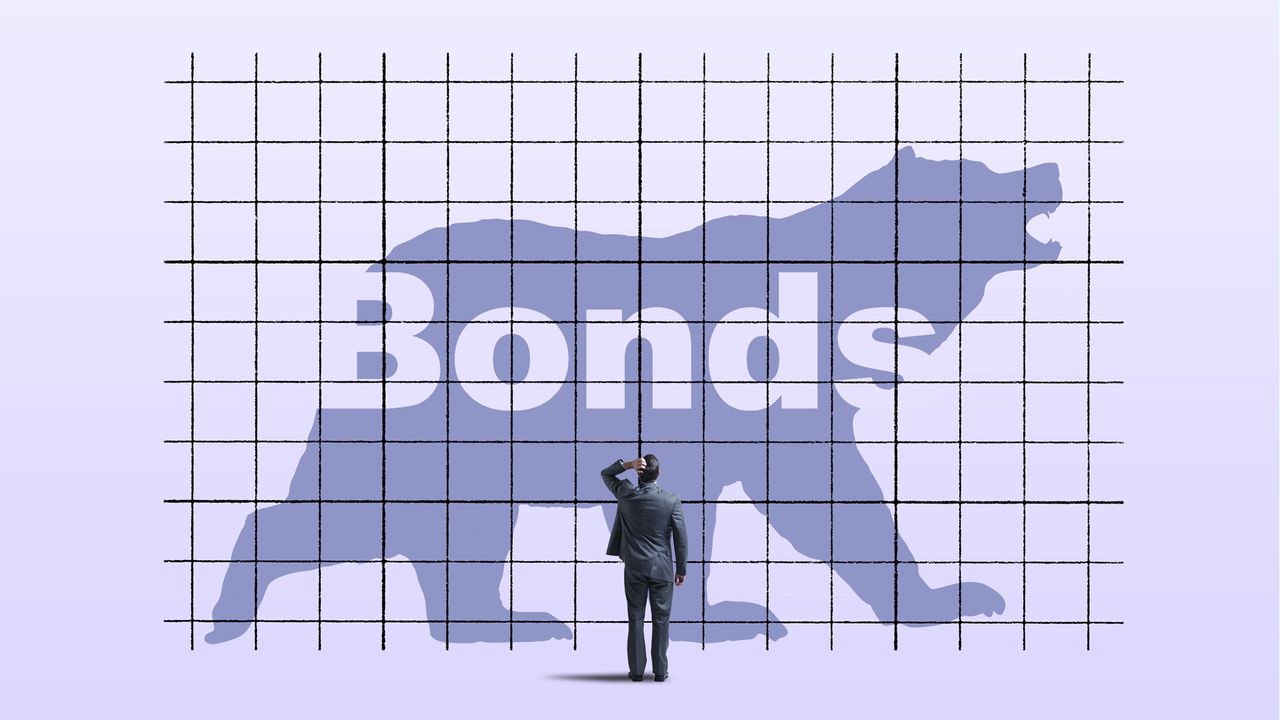
# The Bond Bear Market Is Reshaping How Investors Should Think About Diversification
Bond prices have fallen for over a decade. The longest bear market in bond history tests investors' patience and forces hard decisions about portfolio construction. Sentiment turned sour as rising interest rates crushed bond valuations, and many savers now question whether bonds belong in their portfolios at all.
The math is straightforward. When the Federal Reserve raises rates, existing bond prices fall. Higher yields on new bonds make old bonds worth less. This inverse relationship hammered bond holders from 2012 through 2023 as rates climbed from near zero toward 5 percent. Traditional 60/40 portfolios, which pair 60 percent stocks with 40 percent bonds, delivered losses in both asset classes simultaneously. That broke the diversification playbook many investors followed for decades.
Bond yields have climbed high enough now to attract serious savers. The 10-year Treasury currently offers around 4 percent annual returns without stock market risk. Money market funds pay 5 percent or more. High-yield savings accounts deliver 4.5 to 5 percent, available at banks like Marcus by Goldman Sachs and Ally Bank. These returns reward patience.
Yet skeptics point out that bonds still carry duration risk. If rates climb higher, bond prices fall further. Conversely, if the Fed cuts rates, as markets expect in 2024, existing bonds with higher yields will gain value. That's the core tension. New investors face a choice: lock in current yields by buying bonds now, or wait for potentially higher rates later.
The bear market teaches investors several lessons. First, diversification means more than stocks and bonds. A balanced portfolio might include real estate investment trusts (REITs), commodities, or Treasury Inflation-Protected Securities (TIPS). Second, yields matter. At 1 percent, bonds looked like ballast. At 4 to 5 percent, bonds deliver real returns. Third, timing matters less than start dates. An investor who bought bonds at the peak of the bear market now owns assets worth more than purchase price.
Financial advisors split on the path forward. Some recommend waiting for higher rates before adding bonds. Others suggest dollar-cost averaging into bonds now, purchasing small amounts monthly to capture today's yields while hedging against further rate increases. Investors with short time horizons benefit from bonds' predictability. Those with decades until retirement can tolerate stock market volatility and may skip bonds entirely.
The landscape has shifted. Savers no longer need to accept 0.01 percent from a bank savings account. Vanguard's Total Bond Market ETF (BND) charges just 0.03 percent in annual fees while delivering broad exposure to investment-grade bonds. iShares TIPS Bond ETF (TIP) protects purchasing power against inflation. For safety-conscious investors, short-term bond ETFs or Treasury ladders lock in yields with minimal duration risk.
The longest bond bear market in history ends when sentiment shifts. That happens when investors recognize that 4 to 5 percent is a respectable return. Bonds won't generate 40-year bull-market returns. They will deliver stability and income when stocks stumble. After a decade of losses, that's love enough for most portfolios.