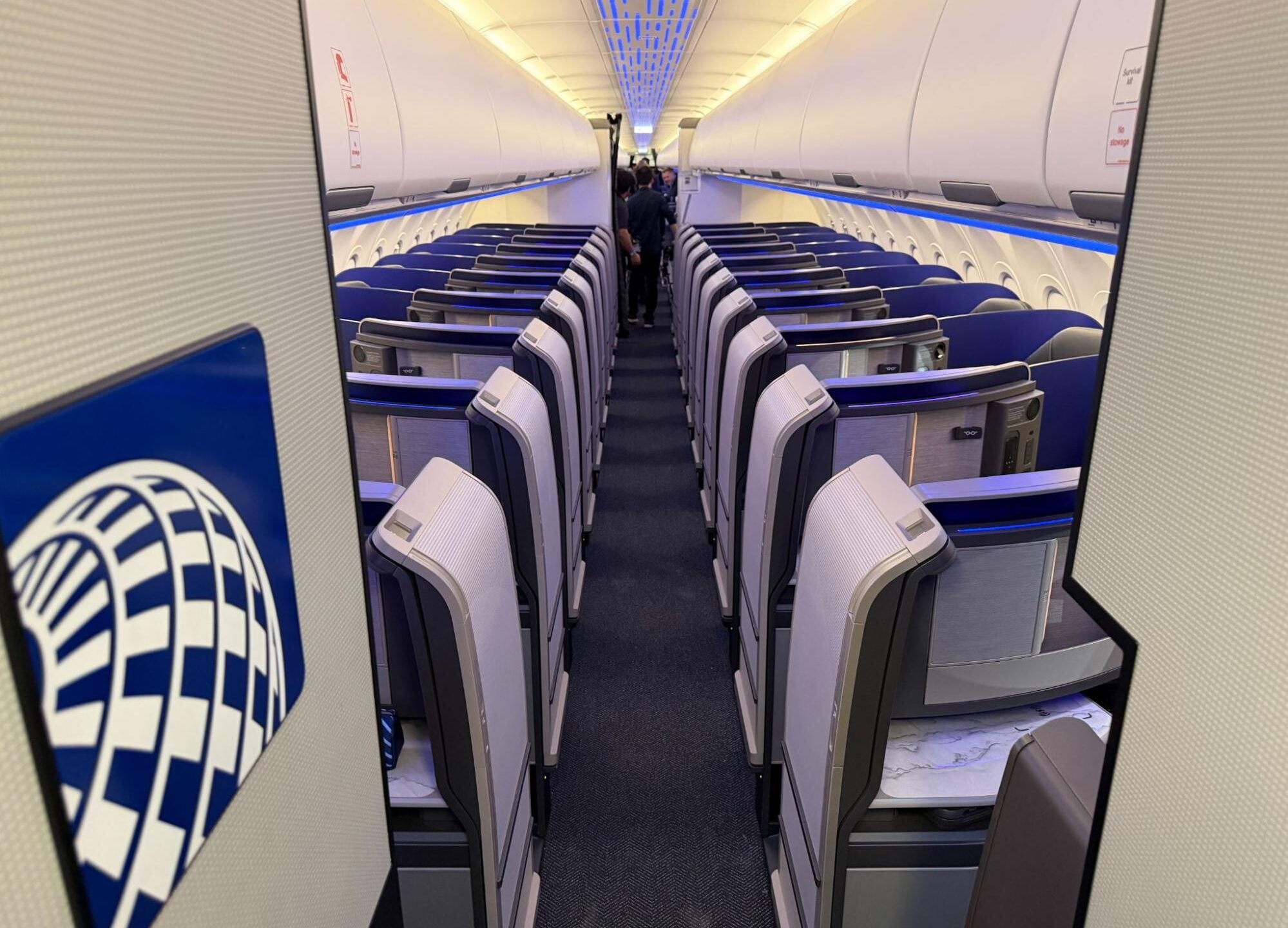
United Airlines is deploying the Airbus A321XLR, a long-range narrowbody jet, to expand transatlantic service to smaller European cities that major carriers have historically ignored. The aircraft will begin operations on United's route network within the next two years, fundamentally shifting how American travelers access secondary European destinations.
The A321XLR differs from traditional widebody jets like the Boeing 787 or Airbus A350. It seats fewer passengers but extends range to 4,700 nautical miles, enough to cross the Atlantic with full payload. This means United can now profitably serve cities like Bordeaux, Lisbon, Nice, and Prague with dedicated nonstop flights from U.S. hubs instead of routing passengers through major European hubs like London or Frankfurt.
The cabin configuration matters for premium travelers. Each aircraft carries 20 Polaris business class lie-flat seats in the front. That's fewer than the 48 to 70 lie-flat seats on United's widebody international aircraft, but the trade-off is direct access to European cities where business class capacity didn't exist before. A traveler flying Chicago to Prague on the A321XLR can now book a lie-flat seat instead than enduring a connection through a major hub.
Economy passengers get roughly 170 seats in a three-cabin configuration. The narrower fuselage means tighter aisle space and slightly smaller windows compared to widebody aircraft. But the direct routing advantage often outweighs cabin comfort trade-offs, especially for leisure travelers seeking shorter total flight times.
This strategy mirrors what Norwegian Air did with the Boeing 787 Dreamliner years ago, serving niche European markets with demand from diaspora communities, adventure travelers, and business professionals who didn't justify widebody frequency. United's financial model bets that point-to-point service into secondary cities generates sufficient load factors and revenue to offset higher per-seat fuel costs on a narrowbody.
The A321XLR also gives United flexibility. If demand drops on a particular route, moving the aircraft to another transatlantic pairing requires less scheduling disruption than repositioning a widebody. The plane costs roughly 30 percent less to operate per available seat mile than larger aircraft, improving profitability on thinner routes.
For frequent flyer members, this expansion opens new award redemption opportunities. Polaris bookings into smaller cities typically face less search competition than premium seat inventory on traditional hubs. Business travelers can accumulate miles faster on these routes while accessing less congested airports in secondary European cities.
The timing aligns with post-pandemic travel patterns. European leisure markets have recovered strongly, and business travel to secondary cities remains below 2019 levels, creating an opportunity for United to capture price-sensitive corporate bookers willing to accept narrowbody configurations for direct flights.
United's CEO previously signaled the carrier would order additional A321XLRs beyond initial commitments. This suggests the airline views the aircraft as central to its long-term transatlantic growth strategy rather than a one-off fleet addition. More routes to European secondary cities will likely follow the initial wave of deployments.