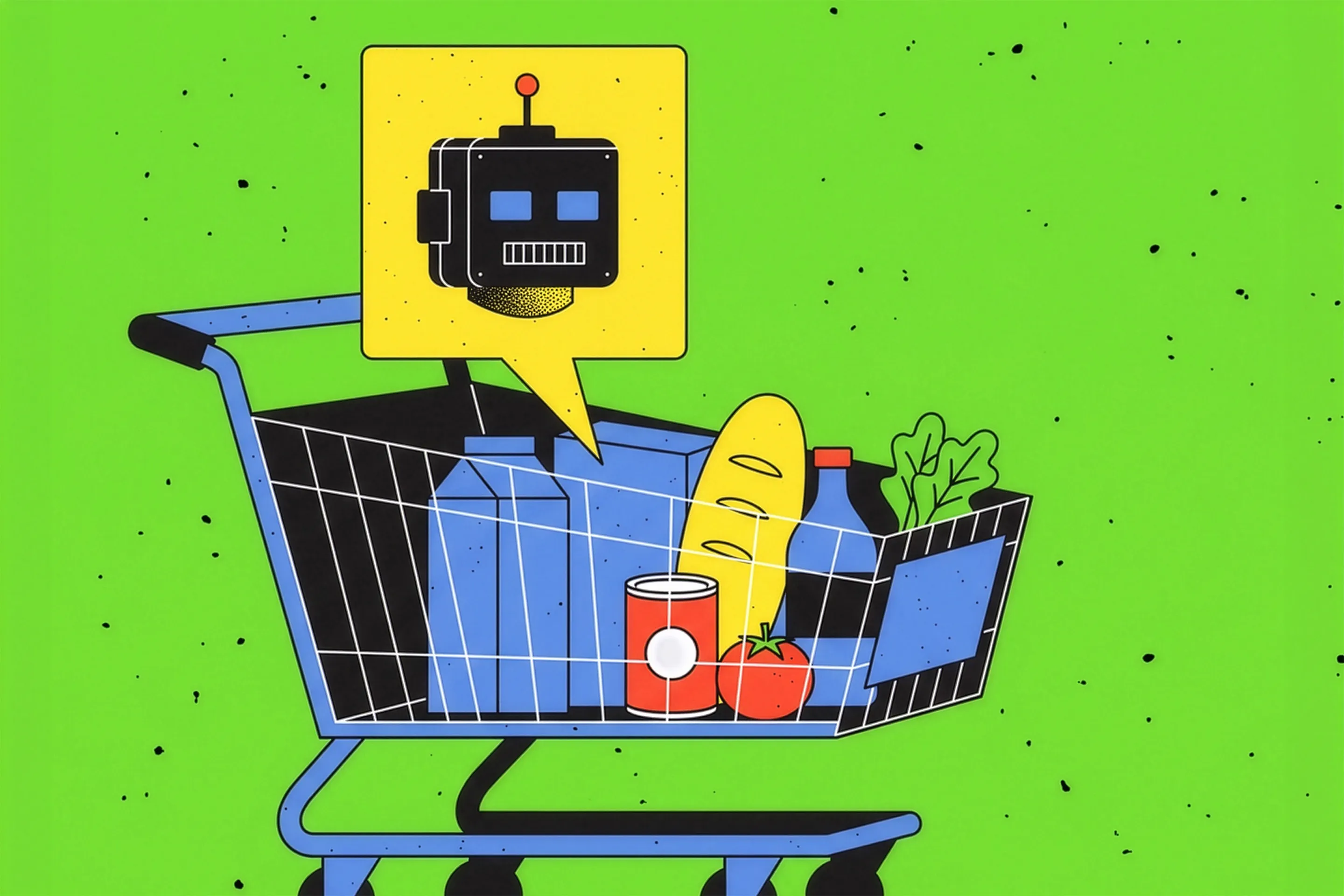
# Your Grocery Store's AI Chatbot Could Be Making You Spend More Money
Albertsons, Walmart, and Instacart have deployed AI shopping assistants designed to streamline your grocery buying process. What the stores aren't advertising: these tools are working exactly as intended, and the intention includes increasing your bill.
Each retailer has reported larger shopping baskets and higher sales when customers use their AI chatbots. The assistants function like personal shopping guides. You tell them what you need, and the algorithms recommend products, suggest substitutions, and bundle items for purchase. Sounds convenient. In practice, it's a revenue optimization tool disguised as customer service.
Here's how the economics work. When you type "chicken for dinner" into Albertsons' chatbot, the system doesn't simply return the cheapest bird. It recommends complementary products, suggests premium or private-label versions, and bundles items in ways that increase your total spend. Walmart's assistant works similarly. Instacart, which operates across multiple grocery chains, has the added advantage of tracking your shopping patterns across stores and using that data to propose higher-margin items.
The uptick in spending isn't trivial. Retailers report measurable basket increases whenever adoption of these tools rises. That translates to real money leaving your wallet. For a household spending $150 per week on groceries, a basket increase of just 10 percent adds $780 annually to your food budget.
The mechanics matter for your wallet. AI chatbots use recommendation algorithms trained on purchase data. These systems identify which product combinations generate the highest profit margins, not which purchases deliver the best value to you. A premium pasta brand might appear ahead of the store brand not because it's superior, but because it carries a higher margin. Bundled deals suggested by the chatbot? They're often engineered to move slower-selling items that need clearance.
Instacart presents a particular risk because the service charges delivery and markup fees on top of higher base prices. Using an AI assistant on Instacart compounds the problem. You're paying delivery fees on an artificially inflated basket.
The honest answer from retailers would be: our AI assistants are designed to maximize our revenue, not minimize your spending. Instead, they market these tools as time-savers and convenience features. They are convenient, but that convenience comes at a cost you're bearing.
What this means for your behavior: treat AI shopping assistants as marketing tools, not neutral helpers. If you use them, treat their recommendations with skepticism. Compare suggested prices against your phone's price comparison app. Check whether bundled deals actually represent savings or just increase your total outlay. Download Ibotta or Checkout 51 to capture rebates the chatbot doesn't highlight.
The strongest defense remains the oldest one: shop with a list, stick to it, and avoid new product discovery at the register or through an algorithm. Your grocery budget will thank you.