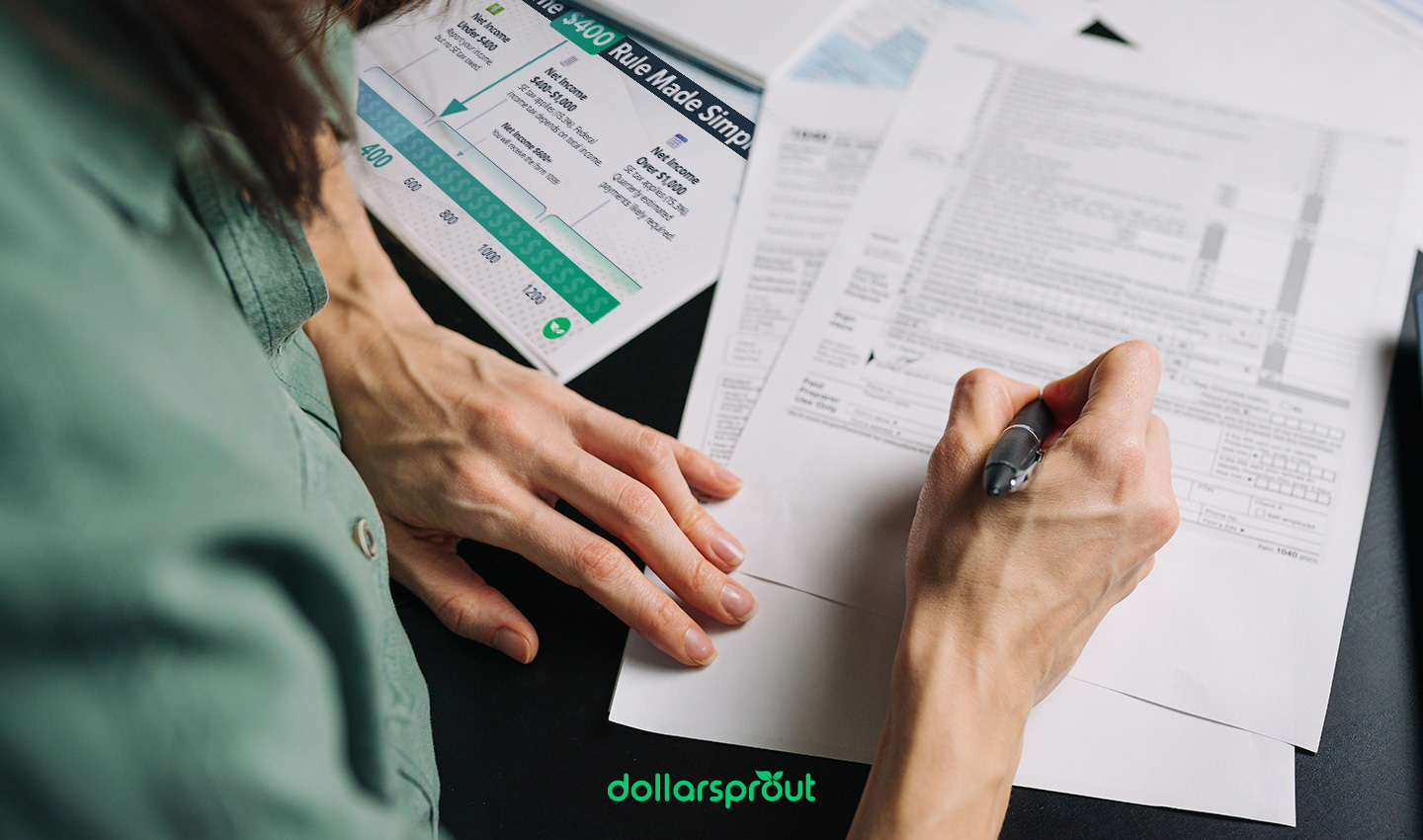
Side hustlers commonly misunderstand when self-employment tax kicks in. The confusion centers on the $600 threshold, which only triggers 1099 form reporting from clients or platforms. It tells you nothing about your actual tax obligations.
The real rule is simpler: you owe self-employment tax on net earnings of $400 or more from self-employment, regardless of whether anyone sends you a 1099. This $400 threshold applies to all side income combined. Make $300 freelancing and $150 selling items online? That's $450 in net self-employment income. You owe SE tax.
Self-employment tax covers Social Security and Medicare contributions that salaried employees split with employers. The rate is 15.3 percent on 92.35 percent of your net self-employment income. If you earn $500 in net side income, you'll owe roughly $71 in SE tax alone, before income tax.
Here's what catches people: the $600 reporting threshold exists separately from the $400 tax threshold. A platform like Fiverr or DoorDash doesn't send a 1099 until you hit $600 in payments. But the IRS still expects you to report all self-employment income above $400 on Schedule SE when you file taxes. The burden falls on you to track earnings and report them, even if no 1099 arrives.
Keep meticulous records of all side income. Track dates, client names, amounts paid, and business expenses. Deductible expenses reduce your taxable self-employment income. A freelance writer who grosses $800 but spends $200 on software only reports $600 in net earnings. This lowers SE tax owed.
File Schedule C (Profit or Loss from Business) and Schedule SE (Self-Employment Tax) with your