The IRS requires you to report all side hustle income, but most gig workers leave thousands in tax savings on the table by missing deductions they qualify for.
Business deductions cut both your income tax and self-employment tax, which means the savings compound. A $5,000 deduction could reduce your tax bill by $1,500 or more, depending on your tax bracket and self-employment status.
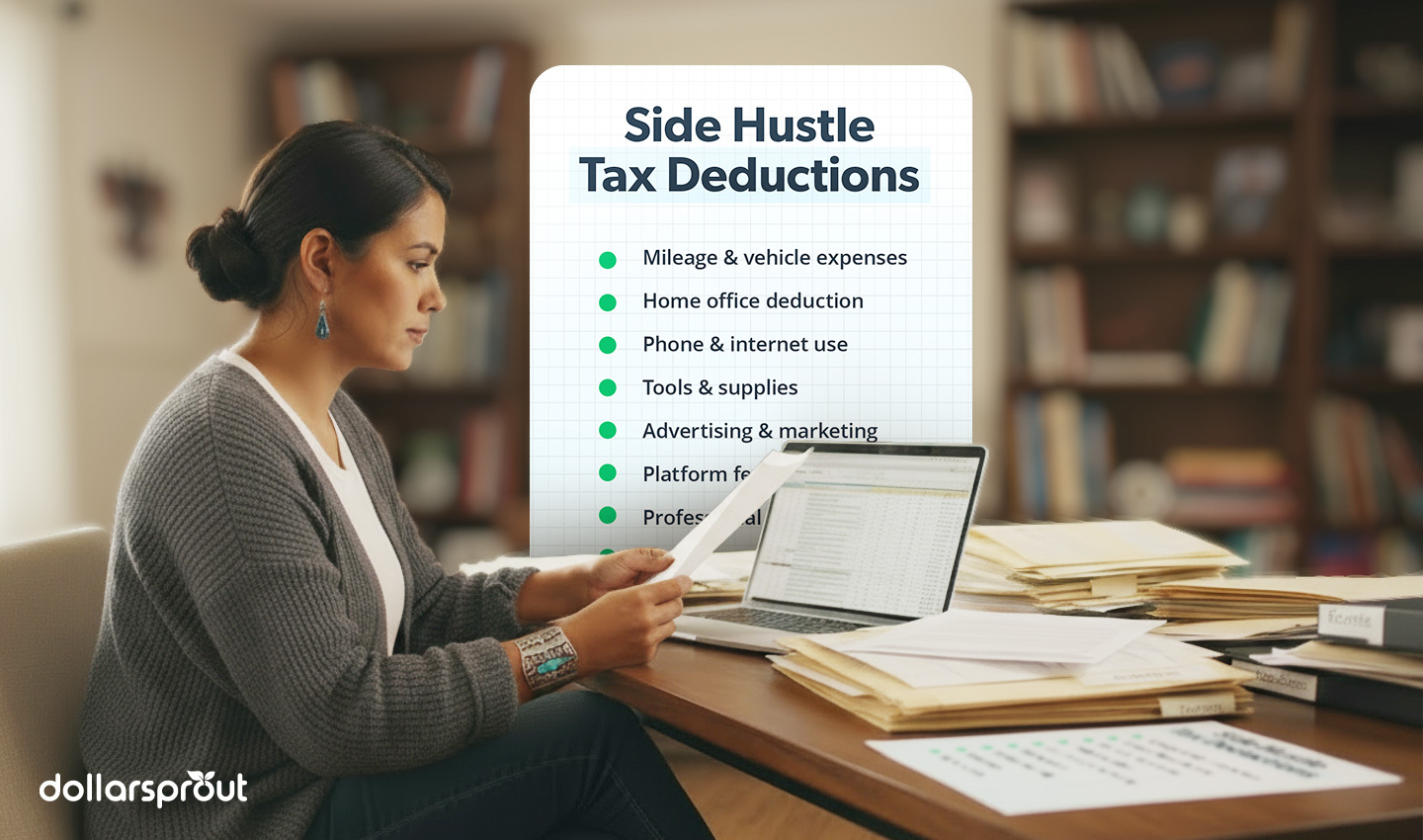
Here's what matters for 2025: the IRS allows you to deduct legitimate business expenses directly tied to earning that side income. Home office space, equipment, software subscriptions, vehicle mileage, meals with clients, and professional services all count. If you drive for a delivery or rideshare gig, the standard mileage rate lets you deduct 67.5 cents per mile. If you use a home office for freelance work, you can claim either $5 per square foot (simplified method) or calculate actual expenses like utilities and rent.
Keep receipts and track expenses throughout the year. Spreadsheets work fine, but accounting apps like QuickBooks Self-Employed or FreshBooks automate the process. The key is separating personal spending from business spending. A coffee you buy for yourself doesn't count. A coffee you buy during a client meeting does.
Self-employed filers need Schedule C to report side income and deductions, then Schedule SE to calculate self-employment tax. These connect directly to your 1040, so deductions lower your total taxable income plus reduce the 15.3% self-employment tax.
The mistake most gig workers make is underreporting expenses because they fear an audit. The opposite is true. The IRS audits returns that look inconsistent. If you earn $50,000 in side income but claim zero expenses, that raises red flags. Legitimate deductions actually make your return look