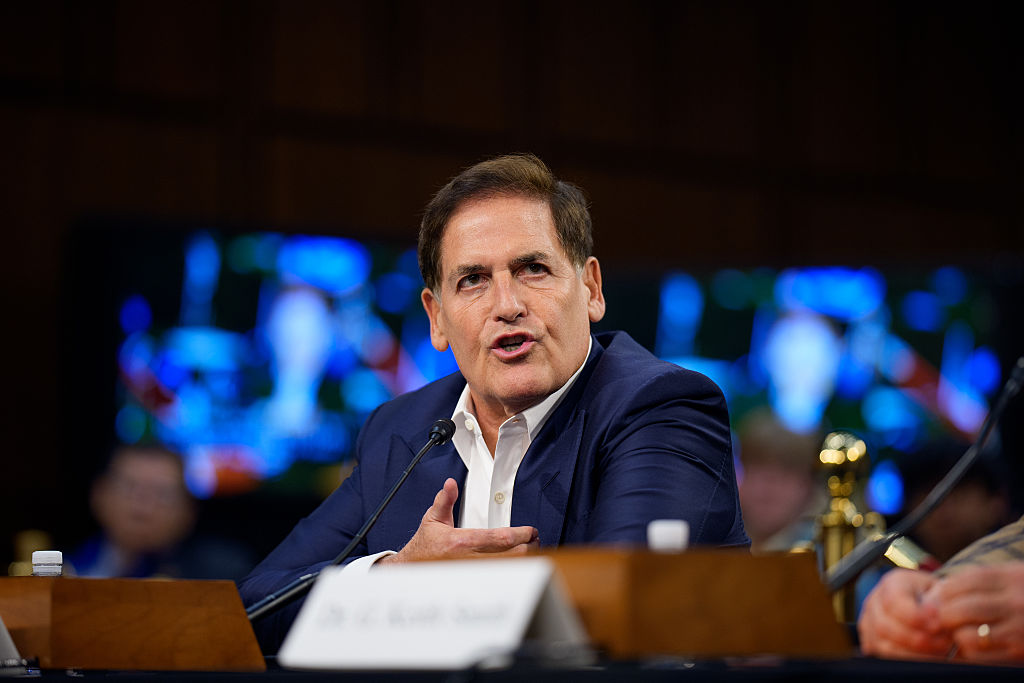
Mark Cuban backs index funds as the superior choice for most investors, citing tax efficiency and rock-bottom costs as decisive advantages over active management.
Index funds track market benchmarks like the S&P 500, requiring minimal trading and generating few taxable events. This structure keeps expense ratios remarkably low. The Vanguard S&P 500 ETF (VOO) charges just 0.03% annually, while the Fidelity S&P 500 Index Fund (FSKAX) costs 0.015%. Compare that to actively managed funds, which often charge 0.5% to 1.5% or higher as managers attempt to beat the market through constant buying and selling.
Cuban's endorsement aligns with decades of research showing that active managers rarely outperform their benchmark indexes after accounting for fees and taxes. An investor putting $10,000 into an index fund with a 0.03% expense ratio pays just $3 yearly. The same amount in a 1% active fund costs $100 annually. Over 20 years, that difference compounds into thousands of dollars lost to fees alone.
Index funds also minimize capital gains distributions. When active managers sell winning stocks, they trigger taxable gains that get passed to shareholders. Index funds only rebalance when their underlying index changes, producing fewer taxable events. For investors in high tax brackets, this tax efficiency translates into substantially higher after-tax returns.
The case for index funds strengthens for everyday investors. You cannot reliably predict which active managers will outperform next year, even if some beat the market this year. Index funds eliminate that guesswork. You simply own the entire market.
This does not mean active investing has zero place. Some professionals with specialized knowledge manage separate accounts for ultra-wealthy clients. Hedge funds and private equity funds sometimes produce exceptional returns for institutional investors. But for