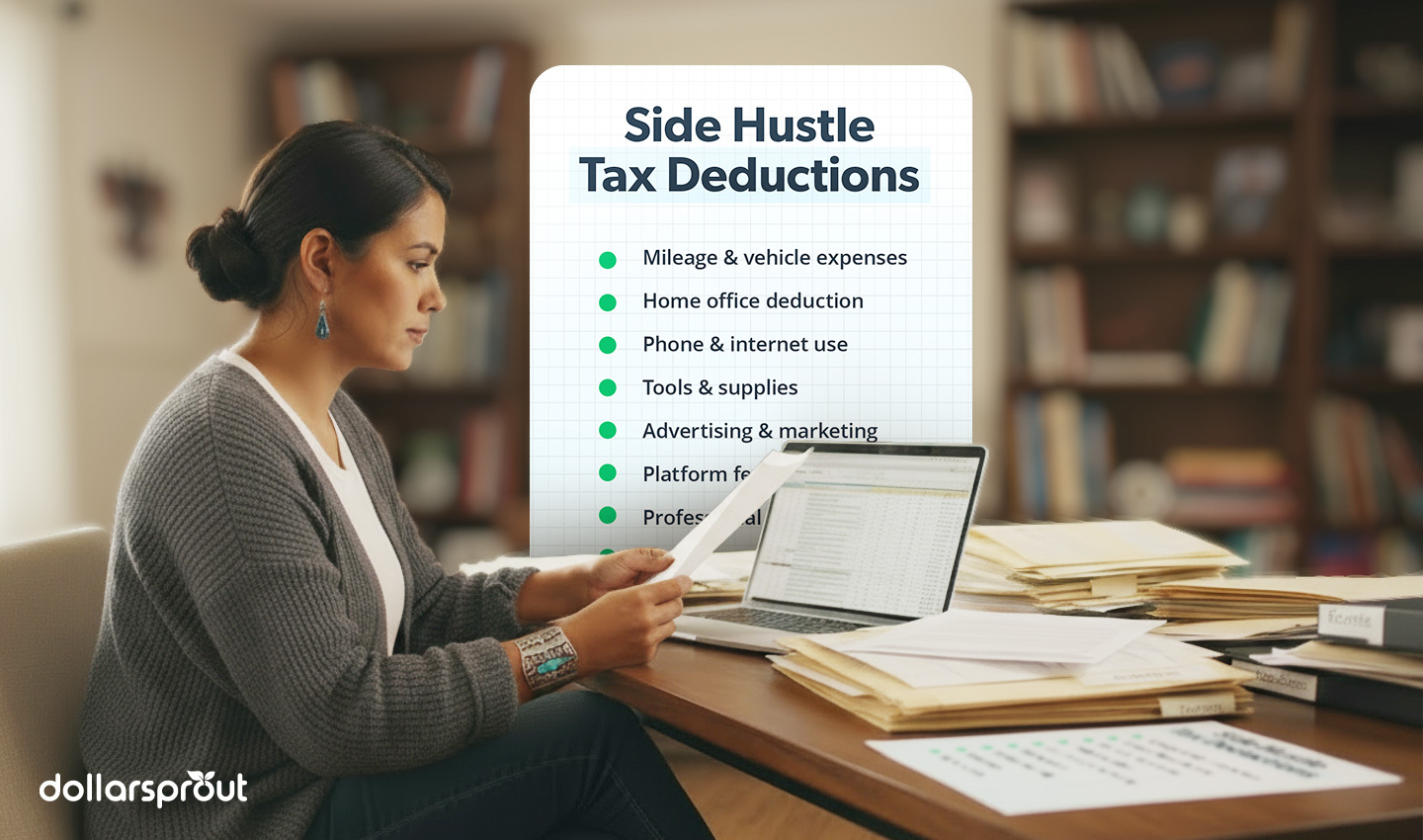
The IRS requires you to report every dollar from your side hustle, but most gig workers leave money on the table by overlooking legitimate deductions. Claiming these deductions reduces both your income tax and self-employment tax, potentially saving hundreds or thousands annually.
Business deductions directly lower your taxable income. If you freelance, drive for a rideshare service, sell online, or consult on the side, you can deduct legitimate business expenses. Home office space, equipment, supplies, software subscriptions, and vehicle mileage all qualify. The key is tracking everything and keeping receipts.
Self-employment tax is where the real savings add up. Gig workers pay 15.3% in combined Social Security and Medicare taxes on net income. Every dollar you deduct through legitimate business expenses reduces the amount subject to self-employment tax, not just income tax. A freelancer who deducts $5,000 in home office costs and equipment saves roughly $765 in self-employment tax alone, plus additional income tax savings depending on their bracket.
Common deductions many side hustlers miss include internet and phone expenses, mileage to client meetings or deliveries, professional development and courses, equipment depreciation, and a portion of home rent or mortgage (if you use dedicated office space). The IRS allows a simplified home office deduction of $5 per square foot, up to 300 square feet, or you can claim actual expenses.
Vehicle mileage deductions apply only to business-related driving. The 2025 standard mileage rate is typically set by the IRS and applies to self-employed drivers. Track miles carefully, as auditors scrutinize this deduction.
Keep meticulous records. The IRS expects documentation supporting every deduction you claim. Use accounting software like QuickBooks Self-Employed or Wave to track expenses automatically. Schedule