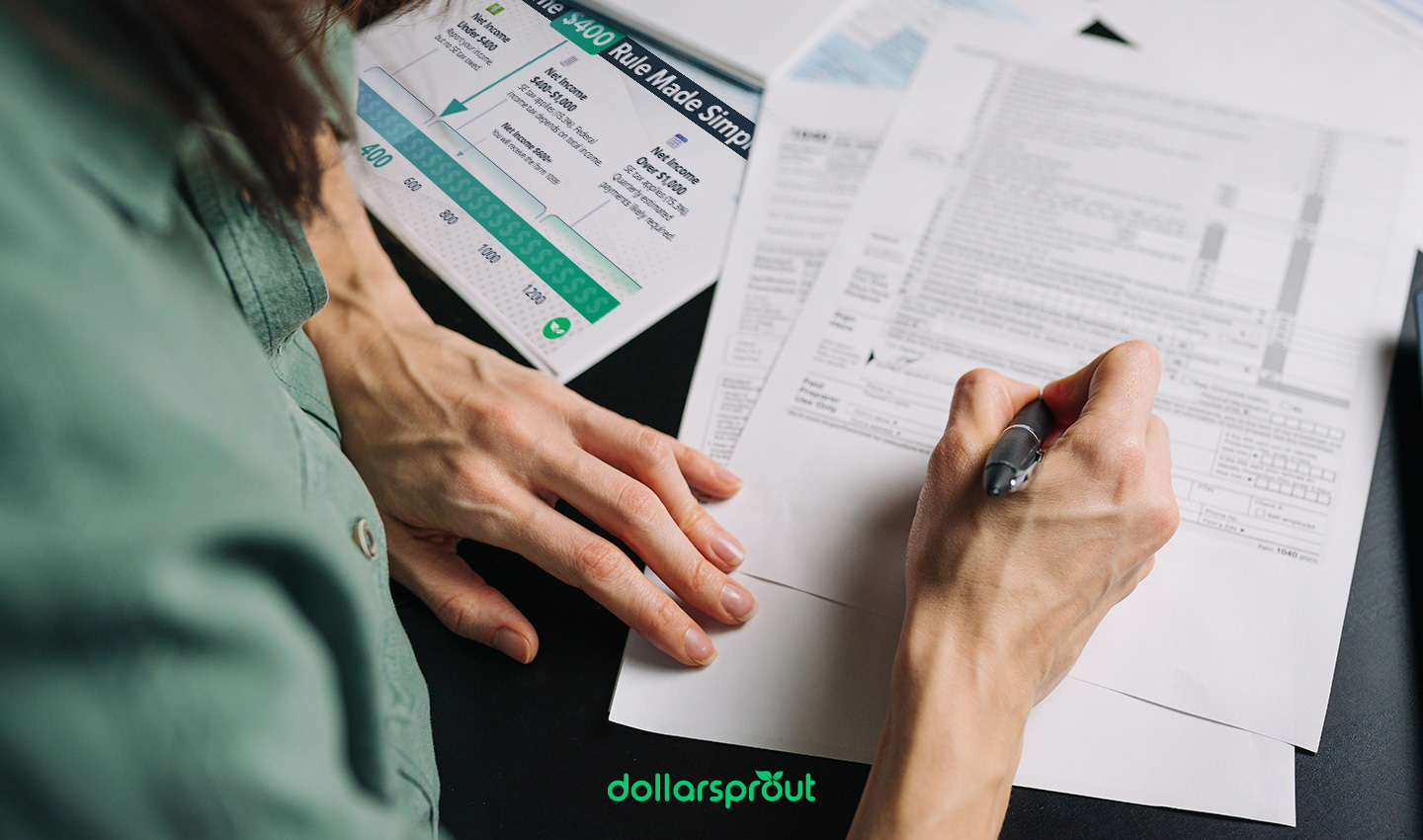
Side hustlers owe self-employment tax on earnings as low as $400, not $600 as many believe. The $600 threshold determines only whether platforms like DoorDash or Uber send you a 1099 form for record-keeping. Your actual tax obligation kicks in much earlier.
Self-employment tax covers Social Security and Medicare contributions that regular employees split with employers. When you're self-employed, you pay both halves yourself. The IRS requires you to file Schedule SE and pay SE tax if your net earnings hit $400 or more in a year.
This matters because failing to report and pay creates audit risk. The IRS tracks income reported on 1099 forms and cross-references tax returns. Mismatches trigger notices. Even worse, unpaid SE tax accrues interest and penalties that compound quickly.
Here's how it works in practice. If you earn $450 from freelance writing or gig work, you owe self-employment tax on that amount despite receiving no 1099 form. You calculate it on Schedule SE, which multiplies your net self-employment income by 92.35 percent, then applies a 15.3 percent tax rate. For that $450 example, you'd owe roughly $62 in SE tax alone, plus regular income tax on the full amount.
The $400 threshold applies to net earnings, not gross. Subtract legitimate business expenses—supplies, software, equipment, mileage—from your income first. A rideshare driver earning $5,000 gross but spending $2,000 on gas and vehicle maintenance owes SE tax on $3,000 only.
Many side hustlers underestimate this obligation because platforms don't withhold taxes automatically like employers do. You must set money aside yourself and either pay quarterly or handle it during tax season. Failing to