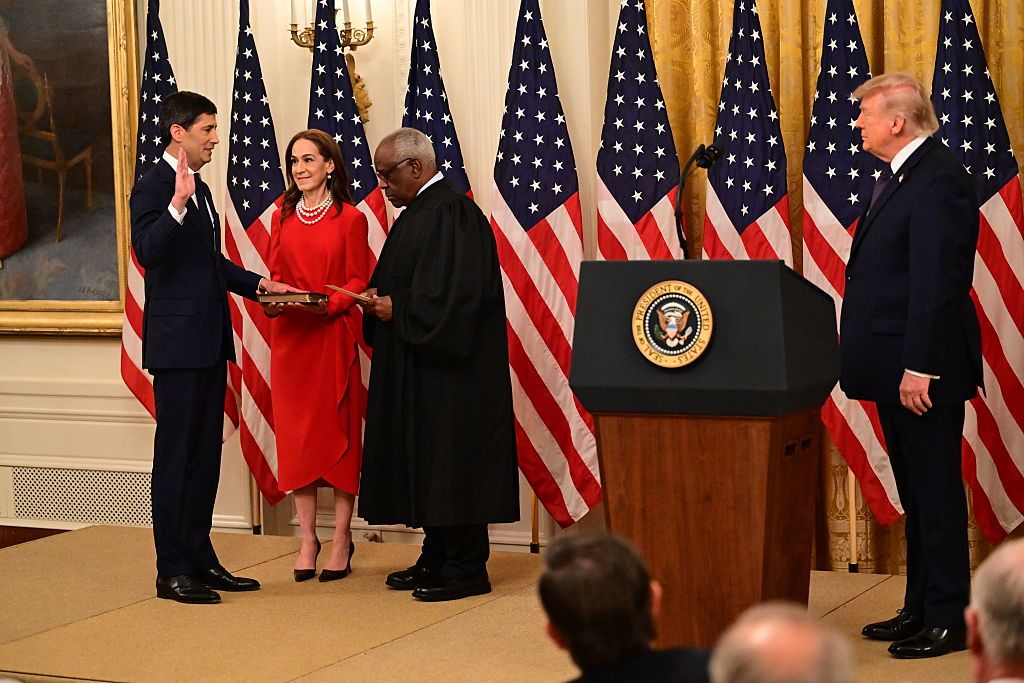
Kevin Warsh has taken the oath as Federal Reserve Chair, marking a significant leadership change at the central bank. Trump's appointment of Warsh signals a shift in monetary policy direction as the new chair assumes control of interest rate decisions affecting savers, borrowers, and investors nationwide.
The Dow Jones Industrial Average climbed to new highs following the announcement, reflecting market confidence in Warsh's leadership. Investors responded positively to the transition, suggesting expectations for a different approach to inflation management and economic policy than the previous Fed administration.
Warsh brings a track record from his previous Fed role and private sector experience. His appointment comes at a critical time when the Federal Reserve balances competing pressures. Savers holding money market accounts and high-yield savings accounts should monitor how Warsh's tenure affects deposit rates, which typically follow Fed policy changes. Current rates around 4.5 to 5.5 percent for high-yield savings accounts depend partly on Fed policy decisions.
Borrowers with adjustable-rate mortgages, auto loans, and variable-rate credit cards face potential shifts in their payment obligations. Fixed-rate borrowers who locked in current rates remain unaffected by Fed leadership changes, though they benefit from the stability a new chair can provide.
Stock market investors saw immediate gains on the news, with the Dow reaching new records. The rally suggests investors believe Warsh will pursue policies supporting economic growth and corporate earnings. However, market movements around Fed chair transitions often prove temporary, and investors should focus on long-term portfolio strategy rather than daily headlines.
The Fed Chair controls the federal funds rate, which serves as the foundation for nearly all other interest rates in the economy. Warsh's decisions on this rate will ripple through mortgages, savings accounts, and investment returns for years ahead. Savers and investors should expect the Fed to continue adjusting policy based on inflation