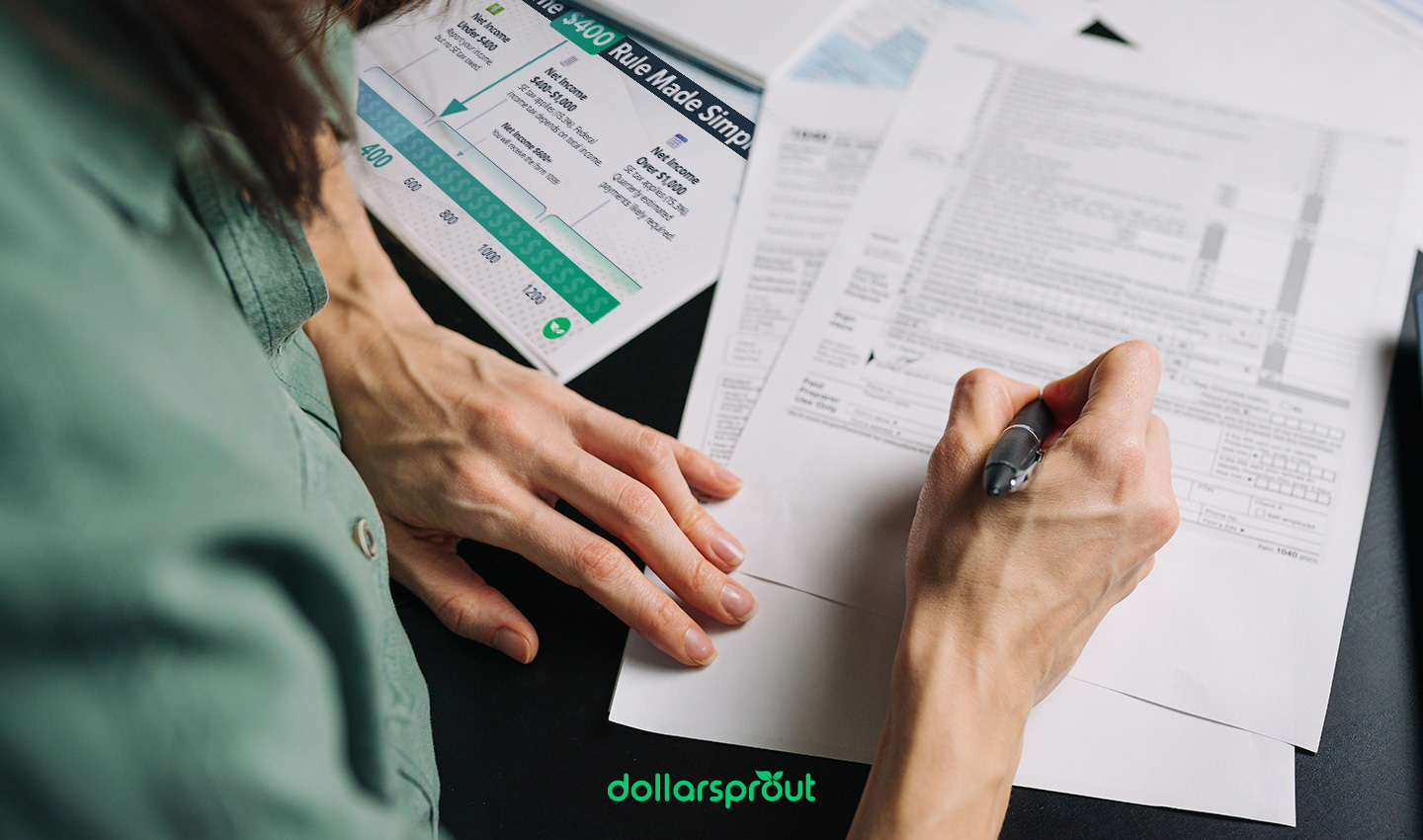
The $600 threshold is a red herring for side hustlers. While platforms and clients only issue 1099 forms once you earn $600, you owe self-employment tax on side income long before that.
The real rule is $400. Once your net self-employment income hits $400, you must file taxes and pay self-employment tax. This applies whether or not you receive a 1099 form.
Self-employment tax covers Social Security and Medicare contributions. As a self-employed person, you pay both the employee and employer portions, totaling 15.3 percent of your net earnings. For someone earning $500 from freelance work, that's roughly $77 in self-employment tax owed, regardless of whether the client issued a 1099.
The confusion stems from mixing two separate thresholds. The $600 1099 reporting requirement is purely administrative. It tells you whether you'll receive formal documentation. The $400 filing requirement is the actual tax obligation trigger. You must report and pay tax on side income above $400 even if you get no 1099 form.
This matters for gig workers, freelancers, and anyone with side income from platforms like DoorDash, Fiverr, Etsy, or direct client work. If you earn $500 from three separate clients who each pay below $600 individually, you owe self-employment tax on the full $1,500. No 1099 forms arrive, but the tax obligation persists.
Failing to report and pay creates problems. The IRS tracks income through various channels beyond 1099s. Tax filing software often flags missing income. Unpaid self-employment tax accumulates interest and penalties.
The takeaway for side hustlers: track all self-employment income from day one, regardless of source or form status. Once it