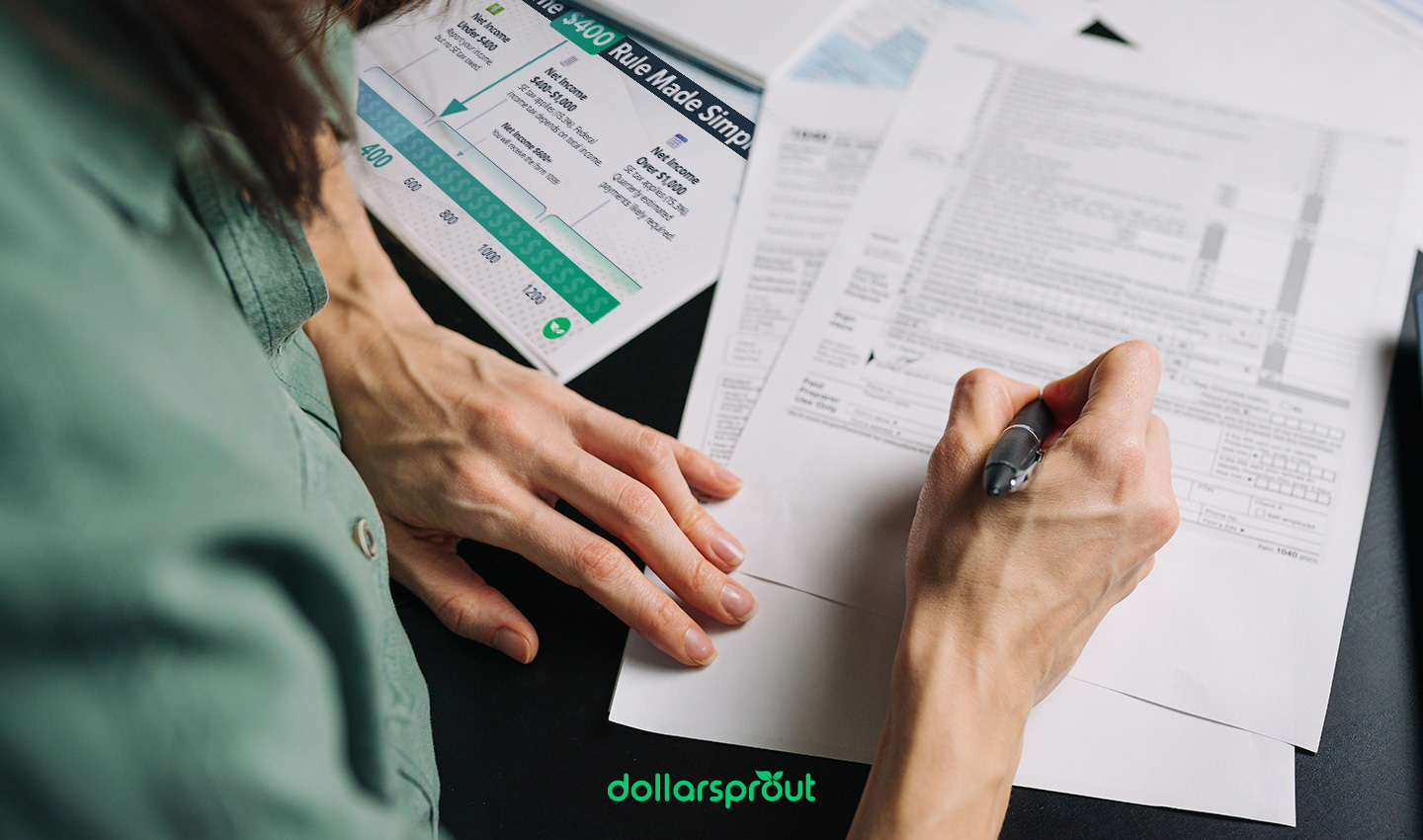
Side hustlers owe self-employment tax once they earn $400 or more from any gig work, regardless of whether they receive a 1099 form. This $400 threshold is the real tax trigger, not the $600 reporting requirement that clients use to decide whether to issue tax paperwork.
Self-employment tax covers Social Security and Medicare contributions for people without traditional employers. Freelancers, Uber drivers, Etsy sellers, and anyone earning money outside a W-2 job must file Schedule SE with their tax return and pay this tax directly.
The confusion stems from a common misconception. The $600 threshold exists only to determine 1099-NEC or 1099-MISC reporting by platforms and clients. Stripe, PayPal, DoorDash, and other services send these forms once you hit $600 in annual earnings. But earning $300, $400, or $550 still triggers tax obligations even without a 1099 arriving in your mailbox.
Here's how it works. If you earn $400 or more from self-employment income in a year, you must file a tax return and pay self-employment tax. The IRS tracks this through Schedule SE on Form 1040. For 2024, self-employment tax rates sit at 15.3 percent (12.4 percent for Social Security plus 2.9 percent for Medicare), though you can deduct half the amount paid as an adjustment to income.
Failure to pay results in penalties, interest, and potential audit risk. The IRS monitors 1099 forms carefully. If a platform reports income you earned but you didn't file taxes on it, the agency's matching systems will catch the discrepancy.
Trackers matter here. Keep detailed records of all side income, including cash payments, Venmo transfers, and invo